Amid a severe shortage of affordable housing for young people in Spain, a project underway in Barcelona could transform the concept of social housing. On a small plot in the Poble-sec district, a building is rising that not only introduces new standards of sustainability but also serves as a hub for professional training. The experiment has already attracted interest from other regions, where innovative solutions to the housing crisis are in high demand.
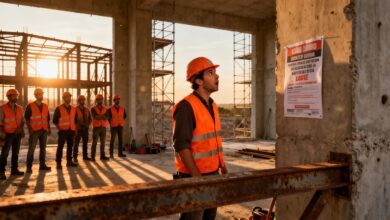
Unlike traditional models, this initiative brings together not only architects and construction workers but also future residents and young professionals from various fields. The project, called WikiHousing, won the BitHabitat innovation competition. Its hallmarks are a modular wooden structure, minimal energy consumption, and the complete elimination of traditional heating or air conditioning needs. More than a hundred young people are participating in the construction process, gaining not just practical experience but also official certification.
New standards
The building consists of just four apartments, each about 50 square meters in size. Despite the modest size of the plot, the project has managed to create fully functional living spaces. Leading companies in the construction industry specializing in eco-friendly materials, solar panels, and water purification systems have been involved. Many elements of the building are made from recycled materials: for instance, the lobby will be adorned with former street tiles, and kitchen furniture will be made from panels previously used at exhibitions.
Architect David Juárez, who heads the project, calls it a “school-building” for future generations. The initiative involves not only local experts but also young architects from other countries who note the unique approach and the opportunity to go through every step—from drawings to assembling furniture with their own hands. According to them, such experience is rare in contemporary architecture.
Social impact
Special attention is given to involving young people from diverse backgrounds. Among the participants are graduates of architectural and technical universities, as well as young people who arrived in Spain unaccompanied and now have the chance to learn a new profession. For many, this is not only an opportunity to obtain housing but also a starting point for legalizing their status and gaining employment.
Several cooperatives and educational centers, as well as major building material manufacturers, support the project. Workshops and hands-on training, including solar panel installation with a special focus on women’s education, have become an essential part of the program. This approach not only enables house construction but also helps shape a new generation of specialists in sustainable building.
Eco-Friendliness and Innovation
The building is designed for maximum energy efficiency. Its location—the south-facing side provides ample sunlight in winter while street trees shield it from summer heat—means heating and cooling costs are nearly eliminated. The use of CLT panels from certified timber and the option to disassemble the structure make this project a model for implementing circular economy principles.
According to participants, the house not only meets but surpasses European standards. The entire concept is based on repurposing urban areas and minimizing ecological impact. This approach has already attracted the interest of authorities in other regions, who are considering implementing similar solutions.
Potential for Growth
This year, Barcelona has become the world capital of architecture, hosting major international congresses on urban development. The modular housing project for young people has attracted significant attention from the professional community. It is seen as an example of how social, educational, and environmental objectives can be integrated into a single project.
In recent years, Spain has seen a growing number of initiatives aimed at creating affordable housing using new technologies and sustainable development principles. Pilot projects with modular buildings and energy-saving systems have already been implemented in Madrid and Valencia. However, this scale of youth involvement and educational focus is unprecedented. Experts note that such projects could serve as a foundation for housing policy reform in the country.