Spain is renowned for its diverse festivals that take place throughout the year. Whether in summer or winter, in bustling cities or small villages, locals find reasons to celebrate, blending tradition, music, and cuisine. Among these events, unique rituals hold a special place, preserved for centuries and attracting the attention of both residents and visitors from across the country.
In August, dozens of festivals are held across Spain, each with its own distinctive character. For example, in Astorga (province of León), historical reenactments are staged, while in Murcia, there are olive pit throwing competitions. But festivals are not limited to summer: in winter, ancient traditions are revived in some regions, transforming small towns into popular destinations for visitors.
One such unique tradition is celebrated in the Andalusian village of Lúcar, located in the province of Almería. Here in January, locals honor Saint Sebastian, regarded as the patron of bread. The origins of this festival date back to the 17th century, when, by order of King Philip II, Don Juan of Austria designated Sebastian as the patron after the expulsion of the Moriscos from these lands.
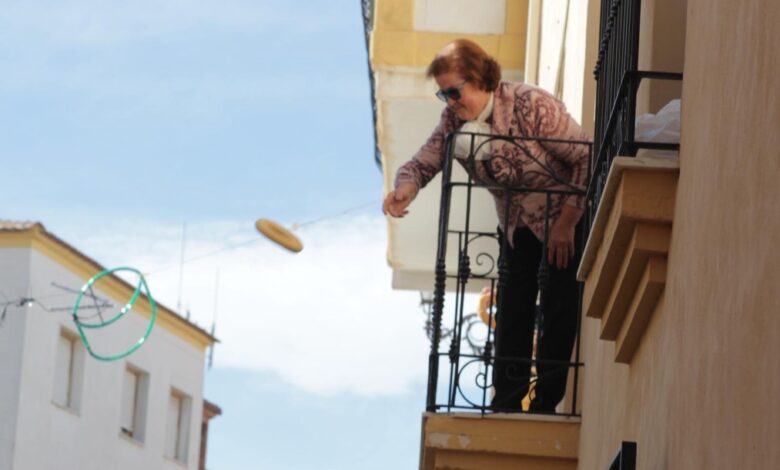
The main events begin on January 19 with night bonfires lit in various parts of the village. The next day features the central event—a procession with the icon of Saint Sebastian. At this moment, Lucar residents step out onto their balconies and start throwing down bread rings—roscos—and sometimes even whole sandwiches. In neighboring Tíjola, the tradition has gone even further: once, a whole jamón ham was thrown from a balcony, causing quite a stir among the crowd.
It is believed that the custom of throwing bread is linked to giving thanks for the harvest and prayers for well-being. According to one version, landowners in the past shared bread with fellow villagers to support them in difficult times. Today, this tradition has turned into a lively contest: whoever collects the most roscos can stock up on bread for an entire year—many freeze their stash and use it gradually.
The festival in Lucar is not the only example of Spain’s unusual customs. In other regions, there are also vibrant and distinctive festivals: from the famous Tomatina to colorful parades with orchestras in Galicia. In small towns and villages, such events become a reason for everyone to gather, for young people to return, and for attracting tourists.
In Lucar and its surroundings, the festival of San Sebastián brings together people of all ages. The festivities include not only processions, but also large communal feasts, concerts, and traditional games. For many visitors, it’s a chance to experience authentic rural Spain and witness how old customs are kept alive in modern society.
The tradition of throwing bread and even jamón from balconies is a vivid example of how Spain honors the past and turns it into a celebration for everyone. Such events are a reminder that Spanish culture is rich not only in architecture and cuisine, but also in vibrant traditions that make each village and city unique.