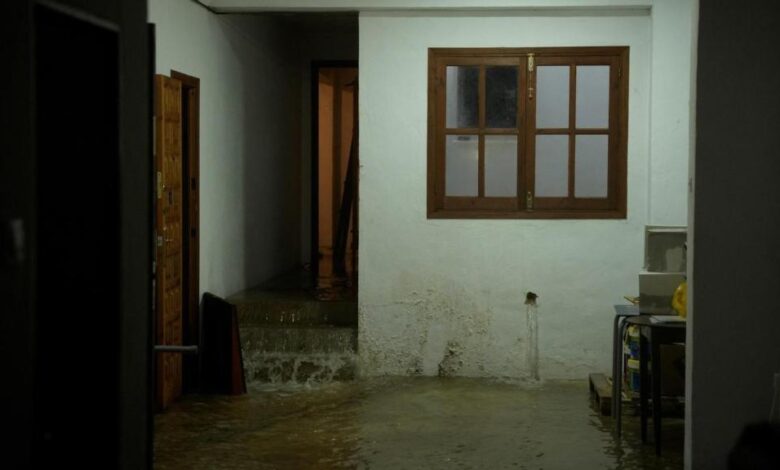
In recent days, residents of Andalusia have faced a situation that could affect anyone living in a region with active hydrology. Unexpected underground tremors and the mass evacuation of thousands of people have become a direct consequence of a rare natural phenomenon—a sudden surge in groundwater levels. This event has not only disrupted everyday life but also raised concerns about the safety of entire communities.
As a result of abnormal rainfall, the water level in underground layers rose by 200 meters in a short period. Such a jump led to cracks, noises, and even water emerging through electrical outlets in homes. Authorities were forced to take emergency measures to prevent tragedies, organizing the evacuation of more than 11,000 people. Residents of Grazalema were particularly affected, where the consequences were most pronounced.
Forced evacuation
In the towns of El Bosque, Jimera de Líbar, Cortes de la Frontera, and Grazalema, underground tremors were recorded that previously had not raised concerns. However, this time the situation got out of control. Authorities decided on the temporary relocation of residents to avoid risks to life and health. Many families had to leave their homes in a hurry, uncertain of when they would be able to return.
In some houses, water even began seeping through electrical outlets and walls, raising further concern. Local residents note that they have never encountered anything like this before. Although such tremors are not uncommon in Andalusia, the scale of the response to the rainfall came as a surprise even to experts.
Causes and consequences
Experts explain that the reason was a unique accumulation of water in underground layers, both in terms of volume and speed. Usually, such processes go unnoticed, but this time, heavy rains sharply altered the hydrological situation. As a result, stresses developed in the soil, causing minor earthquakes and characteristic noises.
Specialists emphasize that such phenomena do not pose a serious threat if the water level begins to recede. However, a return to normal life depends on weather conditions. It is expected that a decrease in water levels may take several weeks, while full recovery could take up to several months. A new wave of precipitation, forecast for the near future, may slow this process but is not expected to worsen the situation.
Expectations and uncertainty
It is still unclear when residents will be able to return to their homes. It all depends on how quickly the excess water leaves the soil and how stable the weather will be in the coming weeks. Authorities stress that people’s safety is the top priority, and returning will only be possible after the situation has fully stabilized.
The President of the autonomous community of Andalucía, Juanma Moreno, stated that evacuees will remain out of their homes until their safety can be guaranteed. Despite the improvement in weather conditions, water levels in rivers and underground layers remain high, and the number of evacuees continues to grow.
Context and similar cases
There have been occasions in the history of Andalucía and other regions of Spain when natural phenomena led to mass evacuations. For example, in 2018, heavy rains triggered landslides and flooding in Málaga, forcing hundreds of people to leave their homes. In 2021, after prolonged rainfall in Murcia, the groundwater level rose so much that entire neighborhoods were flooded. Such events are always accompanied not only by material damage but also by psychological stress for local residents. In recent years, experts have noted that extreme weather events are becoming more frequent, demanding greater preparedness from both authorities and citizens for unexpected situations.