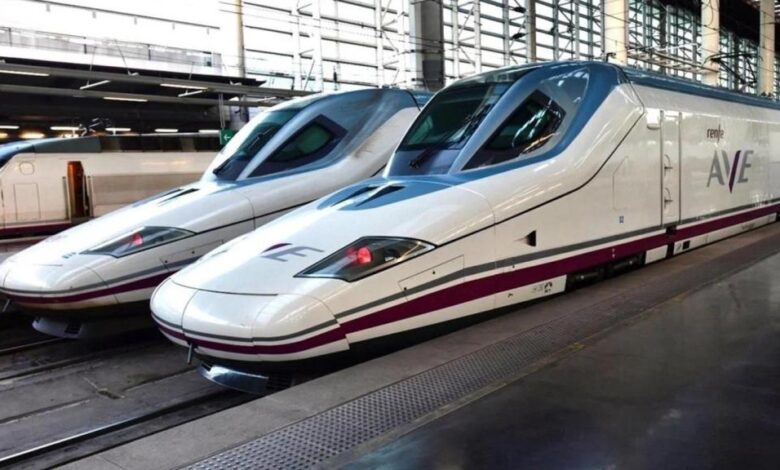
A new round of debate over railway safety is unfolding in Spain. A fresh crack was discovered in the rail on a key section of the Madrid-Barcelona high-speed line, between Alcover and L’Espluga de Francolí in the province of Tarragona. This incident forced the rail operator to once again impose strict speed limits—now trains must slow down to 80 km/h on this stretch, several times lower than usual for high-speed routes.
The situation is worsened by the fact that such incidents are not happening for the first time. In recent weeks, the line has experienced regular disruptions, with both passengers and drivers increasingly facing unexpected delays and schedule changes. This time the alert was raised at night: the driver noticed unusual vibrations, after which technicians rushed to the site and confirmed the damage.
Emergency measures
Repair crews acted quickly: the damaged section was temporarily reinforced with a special metal insert joining the broken parts of the rail. This method allows service to resume quickly, but imposes severe restrictions—trains cannot switch tracks, which means traffic becomes one-way and even more vulnerable to disruptions.
As a result, a so-called Temporary Speed Limit (LTV) has been implemented on the line—a measure automatically applied when suspicious vibrations or other signs of malfunction are detected. According to experts, such restrictions are not uncommon, but their number has increased significantly in recent times. Of particular concern is the fact that just a week ago, there was a serious accident on another section of the high-speed route, which may also have been caused by a rail crack.
Impact on passengers
Passengers accustomed to lightning-fast trips between Madrid and Barcelona now have to deal with delays and transfers. On some sections, trains are traveling at half the usual speed for high-speed lines. For instance, between Madrid and Calatayud, the speed is limited to 160 km/h instead of the usual 300 km/h. For many, this has come as an unpleasant surprise, especially after recent promises to upgrade and improve the reliability of the rail infrastructure.
Debate continues on social media: users share photos of queues, complain about the lack of information, and demand explanations from railway companies. Some report that suspicious markings have been found on the wheels of Iryo and Renfe trains that passed through the damaged section, although there is no official confirmation of this information yet.
Systemic failures
Experts note that the increasing frequency of breakdowns and speed restrictions is a troubling sign for the entire system. According to internal protocols, even the slightest sign of track instability triggers automatic speed limits, and repair crews are dispatched mainly at night to avoid disrupting traffic. However, in practice, such measures do not always prevent malfunctions and accidents.
The Ministry of Transport emphasizes that temporary speed restrictions are a standard safety measure, but passengers are increasingly asking: why is such a vital line for the country regularly at risk? Behind the scenes, possible causes are being discussed — from infrastructure wear and underfunding to route overload.
Unexpected details
This time, attention was drawn to details that usually go unnoticed. For example, after emergency repairs, trains are not allowed to overtake each other on the damaged section, creating scheduling challenges and increasing the risk of further delays. In addition, experts point out that such incidents could be linked to abnormal weather conditions or operational errors, but no official explanations have yet been given.
While railway companies and authorities are working to stabilize the situation, passengers can only keep an eye on updates and hope that the new restrictions will not lead to even more serious consequences. The issue of high-speed train safety in Spain is once again taking center stage, with the scandal over the condition of the tracks continuing to escalate.