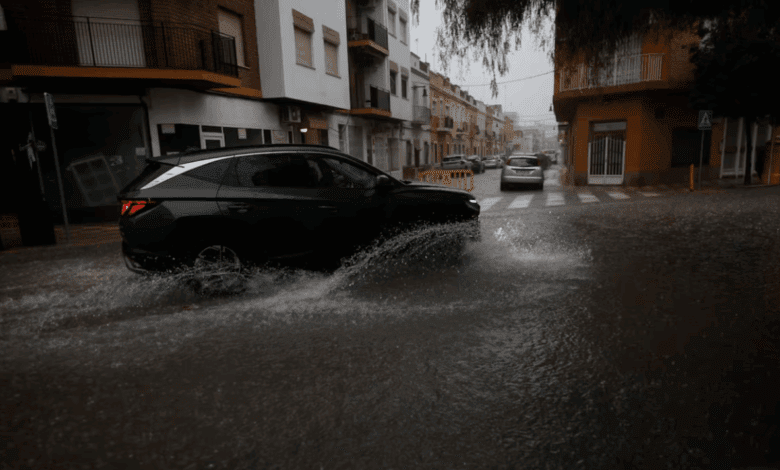
At the end of December 2025, the Valencian Community found itself at the epicenter of a devastating weather disaster. Powerful rains and thunderstorms virtually paralyzed daily life across dozens of municipalities, leaving behind destroyed roads, flooded homes, and frightened residents. Without waiting for a federal response, regional authorities demanded that the central government declare the hardest-hit areas as a state of emergency. This step would open the way for state compensation and speed up recovery efforts.
It’s not just about material losses. For many residents of Valencia and Alicante, these days became a real test of endurance. In some areas, more than 250 liters of rainfall per square meter fell within 24 hours, with thousands of lightning strikes illuminating the sky. The outburst of nature recalled the tragedy of October 2024, when flooding claimed hundreds of lives. This time, fortunately, there were no mass casualties, but fear and anxiety have once again settled in the hearts of locals.
Authorities’ response
The Valencian government, led by Carlos Mazón, has found itself in a difficult situation. Until recently, officials reported on reducing the number of advisers and optimizing expenses. However, recent disasters have forced a reassessment of staffing policies. Restrictions on the number of temporary workers have been lifted to ensure a rapid response to the aftermath of natural disasters. Now, the administration has at its disposal the maximum number of specialists needed for relief efforts and coordinating assistance.
Officials openly admit that previous austerity measures have become irrelevant in the face of large-scale devastation. The authorities emphasize that their actions serve residents’ interests, and expanding the staff is an unavoidable step. Still, not everyone in the region supports these decisions. Some opposition politicians have already accused the government of taking advantage of the disaster to expand its own bureaucracy.
Extent of the destruction
The disaster spared neither major cities nor small towns. Districts along rivers and ravines—Barxeta, Guadassuar, Simat de la Valldigna—suffered the most. In Alicante, municipalities along the Segura River—Albatera, Orihuela, Crevillent, and dozens more—were hit. In some areas, floodwaters overflowed, inundating streets and farmland. Local services reported not only property losses but also damage to infrastructure such as bridges, roads, and power lines.
Emergency services operated at maximum capacity. For several days, the region was under a red alert, and residents received urgent notifications about the risk of flooding. Despite all efforts, damage could not be avoided. According to experts, recovery will require substantial resources and time.
Official Requests
The Valencia authorities sent an official request to Madrid to designate the affected areas as disaster zones. This status enables both individuals and municipalities, as well as businesses, to receive government support. The document lists dozens of towns and villages where the damage was most severe. Special attention is given to districts that have previously experienced catastrophic floods.
The region’s technical services and local administrations have confirmed: the damage to infrastructure and private property is immense. Authorities insist on the urgent need for intervention and the activation of all mechanisms of support stipulated by law. Otherwise, the recovery process may drag on for years, leaving many families without a roof over their heads.
Political Context
The December flood has once again exposed the longstanding tensions between regional and central authorities. In Valencia, officials openly express frustration with Madrid’s slow response and are calling for more decisive action. Meanwhile, critics accuse the local government of trying to use the disaster for political gain and to expand its own influence.
The question of who will lead the restoration of the devastated towns remains unresolved. One thing is clear: the region cannot cope without support from the central government. Still, without coordinated efforts, any compensation risks getting bogged down in bureaucratic red tape. Residents of the affected areas want real action, not just promises. While politicians argue, people continue living among the ruins, hoping for a quick return to normalcy.