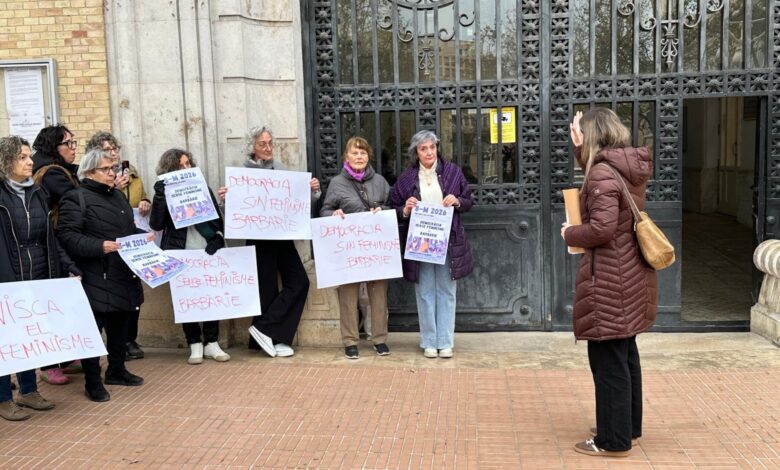
A heated conflict has erupted in Valencia between women’s organizations, the opposition, and city authorities. The reason was the unexpected rescheduling of a traditional fireworks display to March 8, which coincided with the annual demonstration marking International Women’s Day. This decision sparked a wave of discontent among activists and politicians, who believe such actions could undermine the importance of the women’s movement in Spain and call into question the city administration’s priorities.
The situation escalated after it was revealed that the usual march route through the city center would be blocked due to the planned pyrotechnic show. Organizers of the march, along with representatives from Compromís and PSPV-PSOE, accused city hall of trying to push the women’s movement out of the main streets. According to El Pais, activists sent an official letter to Mayor María José Catalá and to Rocío Gil, the official in charge of equality, demanding that the time or date of the fireworks be changed so as not to disrupt the march. However, they have yet to receive a response.
Protest outside city hall
On Tuesday, when the Council on Women’s Affairs was scheduled to take place, representatives of women’s organizations and the opposition arrived at the building but refused to enter as a protest against the authorities’ silence. At the entrance, they were met by Rocío Gil, who suggested discussing the issue within the agenda, but activists insisted on addressing the problem separately. As a result, no dialogue took place and the meeting went ahead without the participation of key representatives from the women’s movement.
The opposition’s position was voiced by Papi Robles from Compromís, who emphasized that, in her view, the current city administration is systematically restricting the rights of women’s organizations and is now also creating obstacles for historically significant events. Robles believes that such actions may lead to the need for new mass protests and require a review of the city hall’s policy towards women’s initiatives.
Possible solutions and authorities’ response
In response to the criticism, city hall representatives stated they were ready to consider two possible options: change the parade route or adjust the timing of both events. According to Rocío Gil, there is a discussion to move the start of the march half an hour earlier and the fireworks one hour later. However, changing the route would require coordination with the government delegation, which could take some time.
Socialists have pointed out that the Women’s Affairs Council is the only platform for open dialogue between the authorities and women’s organizations. Nuria Llopis recalled that such conflicts are not new: activists have been asking for years not to schedule major city events on key dates for the women’s movement, such as March 8 and November 25. The last time, the proposal to put this issue to a vote was rejected by Gil herself, which, according to Llopis, indicates the city hall’s unwillingness to cooperate.
Historical context and consequences
The Valencia authorities stress that they support the annual 8M march every year by providing technical support and security. However, this year, technical services and police suggested changing the route or time for safety reasons. City hall representatives expressed regret that some organizations refused to participate in the Council’s meeting, but assured they were open to dialogue and are already preparing a written response to the activists’ demands.
The situation in Valencia echoes recent debates over women’s rights and ethics in Spanish politics, when Minister Diana Morant sharply condemned sexist attitudes among politicians. Such conflicts demonstrate that issues of equality and respect for the women’s movement remain relevant and require constant attention from the authorities.
In recent years, Spain has seen a rise in cases where city events coincide with important dates for women’s organizations, sparking debates and protests. In 2025, Madrid faced a conflict due to the rerouting of a women’s demonstration because of a sports event. Last year in Barcelona, officials discussed the need to reschedule a city festival so as not to interfere with the March 8 march. These situations highlight the importance for city authorities to consider the interests of all groups when planning public events, in order to prevent further conflicts and maintain public trust.