For nearly 11 months, video footage recorded at the regional emergency center in the Valencian Community (Comunitat Valenciana) remained inaccessible on the day a devastating disaster struck the province. In late October 2024, 229 people lost their lives as a result of the catastrophe. These materials were only made public following a court order, sparking a wave of questions about the official account of the events.
Footage that is typically used for reporting and political publicity took on a very different significance this time. Morning and afternoon clips, commissioned by the emergency department, became crucial for a criminal investigation. Not only do they contradict previous statements by government officials, but they also raise doubts about the transparency of the regional authorities.
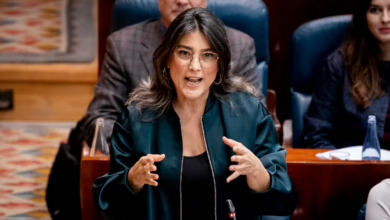
The head of the autonomous community, Carlos Mazón, maintains that the video evidence supports his claims: allegedly, no one was warned about the sudden rise of water in the barranco del Poyo, and all municipalities had been informed in advance about the partial flooding in the morning. According to him, by noon, the water flow in the ravine had nearly subsided, and neither the hydrological service nor meteorologists reported the evening catastrophe. However, the judge handling the case has already summoned Mazón three times to explain himself in person, while local television and production company footage show evidence of audio editing, which may indicate attempts to conceal instructions from the then-head of the department, Salomé Pradas, who is now a defendant in the case.
The video shows Pradas leading a meeting at Cecopi, while the deputy head of the emergency service, Jorge Suárez, is seen live warning about the risk of heavy rains and urging people to monitor the water levels in the río Magro and the Poyo ravine. Emergency logs and phone calls to 112 recorded alarming reports about the situation from early in the morning. Forest firefighters dispatched to monitor the floods left the area around 14:40, but it remains unclear who gave the order for their withdrawal.
Regional authorities explain that their slow response was due to an ‘information vacuum’ from hydrologists and meteorologists, especially regarding the situation in the Poyo ravine. However, video footage indicates that the danger was known from the very start of the day. In March, officials denied the existence of any recordings from Cecopi, although, in reality, filming was being conducted under contract. In September, department representatives again stated that the center neither kept records nor recorded meetings, despite evidence to the contrary.
As a result, the facts that have emerged—and the nearly year-long concealment of the video materials—have raised questions not only about the effectiveness but also the honesty of the response by the Valencian government during the region’s most tragic moment.