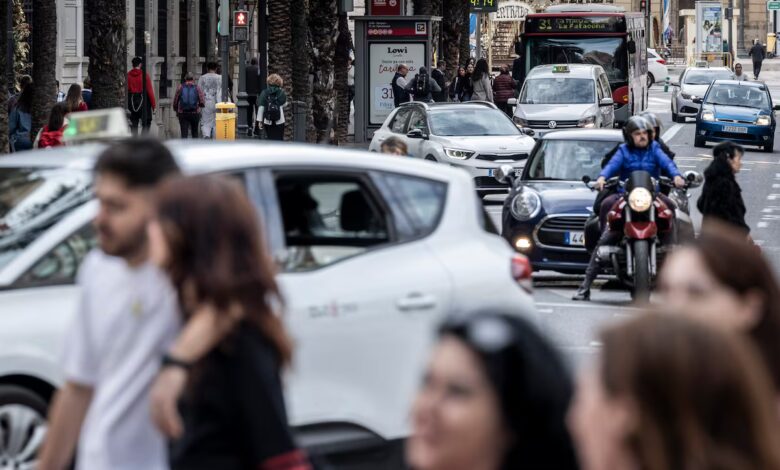
In Valencia, debate has reignited over the creation of a low emission zone (ZBE), which is mandatory for cities with more than 50,000 inhabitants. At the latest city council meeting, opposition parties Compromís and PSPV-PSOE presented their own regulatory proposal. Their aim is to implement the necessary measures by the end of 2025, thereby securing €150 million in support from the national government and the European Union. However, the ruling coalition, made up of the Partido Popular (PP) and Vox, rejected the proposal, leaving Valencia without clear regulations to improve air quality.
The opposition insisted that the low emission zone should cover the entire city, without exceptions for specific neighborhoods. Their plan stipulated that vehicles without an environmental label, registered outside the province of Valencia, would be banned from entering the city starting January 2026. For local residents, restrictions would take effect in July 2026, and for vehicles registered directly in Valencia, from January 2027.
In addition, the opposition’s proposal included municipal subsidies for fleet renewal for owners of older vehicles, as well as allocating parking spaces for neighborhood residents. Unlike previous proposals from PP and Vox, the new initiative also affected cars with a B label: for vehicles from other provinces, the ban was set to take effect from January 2027, and for vehicles from other cities — from January 2028. Owners of B-labeled cars residing in Valencia itself would not yet be subject to restrictions.
Financial risks
The proposal also included benefits and exemptions for socially vulnerable families, determined by income level (Iprem), and a transition period for businesses. Nevertheless, the measure failed to secure majority support. The project, previously agreed upon by PP and Vox, was rejected after Vox withdrew its support at the last minute and the opposition deemed the document too superficial and ineffective.
During the discussion, representatives from Compromís and the Socialists reminded that the lack of an approved low-emission zone could lead to the loss of €150 million earmarked for urban mobility development. They urged the ruling coalition to engage in dialogue and seek a compromise to prevent the loss of such significant funds.
Positions of the parties
Compromís faction leader Papi Robles accused the city council and Mayor María José Catalá personally of inaction and shifting responsibility. She emphasized that the opposition has a concrete and well-developed plan, and suggested that the PP either cooperate with Vox or sit down at the negotiating table with the opposition. Socialist María Pérez reminded that 40% of Valencia’s districts exceed the air pollution limits established by the European Union, and called on the authorities not to ignore the problem.
In response, PP mobility spokesperson Jesús Carbonell noted that the party had already proposed compromise solutions three times, but was not prepared to accept the opposition’s terms, which he believes go beyond the scope of the current debate. He proposed to first approve a basic version of the regulations, and then work on improvements together.
Voice of the Street
Before the session began, representatives of civic organizations also voiced their opinions. María Soledad Ramírez from the La Raiosa neighborhood association called for the strictest possible measures to limit emissions, emphasizing that their area suffers from heavy traffic and needs more green spaces. A representative of the organization Mesura announced their intention to file a complaint with European authorities over the lack of progress on the ZBE issue.
Vox’s position remains unchanged: the party believes that the introduction of the low-emission zone is not an EU requirement, but rather an initiative of Pedro Sánchez’s government. According to Vox representatives, such measures infringe on citizens’ freedoms and could negatively impact employment, especially among those already facing financial hardship. They view the project as excessively repressive.
Outlook
As a result of disagreements between parties and the lack of a unified stance, Valencia still does not have an approved low-emission zone. This jeopardizes the city’s chances of receiving major financial support and delays solutions to its environmental issues. The questions of the city’s environmental future and funding remain unresolved, while political battles continue.