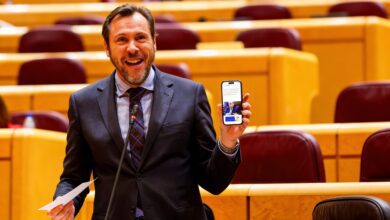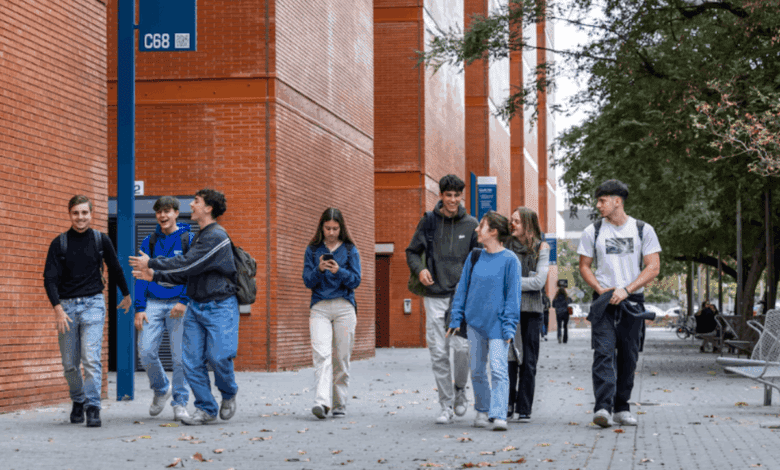
A serious conflict is brewing within the walls of the Universitat de València: amid growing fatigue and frustration among faculty and students, Juan Luis Gandía’s candidacy has unexpectedly emerged. His entry into the race for rector sent shockwaves through the academic community, as he openly declared the need for radical change and collective participation in the university’s governance. In recent months, there has been increasing talk on campus about overwork, resource shortages, and a lack of transparency in decision-making. Many staff admit they are exhausted by endless reforms that yield little tangible result, while students complain about increasingly complex academic processes and mounting bureaucracy.
Gandía, a professor of economics and finance, makes no secret of it: the university urgently needs a new direction. According to him, over the past fifteen years, the university has been trapped by constant budget cuts, leading to staff shortages and a decline in educational quality. The introduction of digital technologies, contrary to expectations, has only added to the workload for teachers and administrative staff, while complex electronic systems and convoluted procedures have fueled widespread dissatisfaction. University insiders increasingly discuss how the previous management style—marked by opacity and mere formal participation—no longer works.
Challenges and Disappointments
The situation worsened after the COVID-19 pandemic, when the university was forced to hurriedly switch to online learning. The technological infrastructure proved unprepared for such changes, and professors faced a lack of support and necessary equipment. Many still recall that period as a time of chaos and uncertainty, when each new directive raised more questions than answers. As a result, according to Gandía, an atmosphere of apathy and distrust towards management developed at the university.
However, despite the general pessimism, there are those at the university who believe change is possible. Meetings and discussions held over the past year have shown that many staff and students are ready to fight for system renewal. Gandía is counting on these people, emphasizing that only through joint efforts can the crisis be overcome and the university’s former reputation restored.
Technology and Inequality
One of the main topics of Gandía’s campaign was the issue of digitalization and the introduction of artificial intelligence. He warns: if clear rules are not established and equal access to new technologies is not guaranteed, the university risks facing even greater inequality among students and staff. In his view, innovation should serve not only efficiency, but also the quality of education, while maintaining a human dimension in learning. Otherwise, the candidate warns, the university may completely lose touch with the real needs of society.
Gandía insists that the university must not only respond to the challenges of the times but get ahead of them by shaping its own development strategy. For this, he says, it is necessary to reassess priorities, abandon a formal approach to management, and focus on openness, dialogue, and collective decision-making. Only in this way, he believes, can trust in leadership be restored and all members of the university community engaged in the process of change.
A new management model
At the heart of Gandia’s program is the concept of ‘good governance,’ grounded in the principles of democracy, transparency, and ethics. He proposes creating an environment where every employee and student can influence the university’s future, with decisions being made after open discussions and with consideration for all stakeholders’ interests. The candidate places special emphasis on resource allocation, support for research projects, and the development of international partnerships. In his view, only this approach will allow the university not just to survive tough competition, but to take a leading position within the European educational landscape.
At the same time, Gandia does not hide the fact that the changes will be painful and will require mobilization from everyone involved. He urges people not to fear difficulties or succumb to apathy, because, in his words, only moving forward together can lead the university out of this prolonged crisis. His slogan, “Amb vosaltres, es pot canviar” (“With you, change is possible”), has already sparked heated debate in the university’s corridors. Some see it as a chance for renewal, while others worry about another wave of reforms and uncertainty.
Promises and Concerns
While some professors and students look to the upcoming elections with hope, others express skepticism and fear that the loud declarations are just another attempt at a power reshuffle. Debates are ongoing at the university about whether the new team can truly change the entrenched system or if it will all end in yet another disappointment. In any case, there are hardly any bystanders left: the battle for the rector’s seat has already become the main event of the year for Valencia’s entire academic community.
In the coming weeks, tensions around the election will rise even further. The question of the university’s future, its role in society, and its ability to respond to the challenges of the times reaches far beyond a single campaign. For many staff and students, this election has become a symbol of hope—or, conversely, a worrying sign of deeper issues that remain to be addressed.