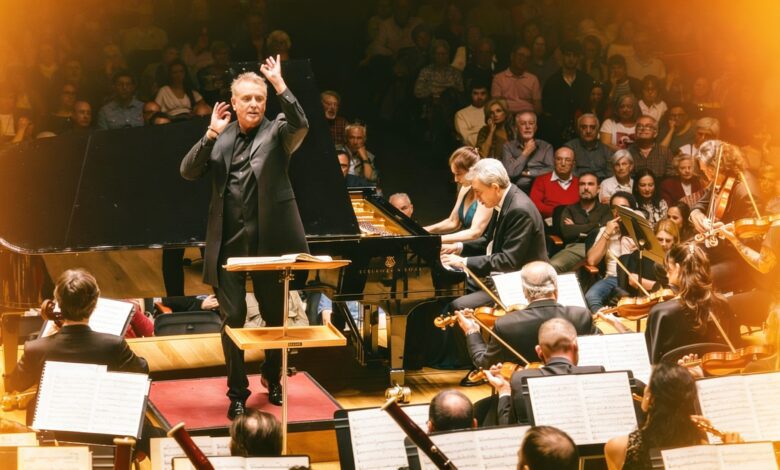
This event was a milestone for Spain: the Orquesta de Valencia (OV) performed for the first time in many years on the stage of Vienna’s Golden Hall at the Musikverein. Such an invitation highlights the growing reputation of Spanish ensembles on the European scene and opens new opportunities for cultural exchange. The country’s musical life gains new momentum, while Valencia strengthens its status as one of Europe’s centers of classical music.
According to El Pais, the concert took place as part of the Jeunesse-Musikerleben series. The performance was conducted by Alexander Liebreich, with the renowned piano duo Silver-Garburg as soloists. The program featured works by composers from different eras: from the overture L’arbore di Diana by Vicente Martín y Soler to the symphonic poem Thus Spoke Zarathustra by Richard Strauss. Special attention was drawn to the Austrian premiere—the concert version of Johannes Brahms’ Third Piano Quartet, arranged by Richard Dünser, performed for four hands and orchestra.
International tours
This is the orchestra’s eighth international tour since launching its overseas activities in 1950. Back then, under the direction of José Iturbi, the orchestra performed 24 concerts in France and the United Kingdom. In the following decades, the OV played in Italy, Turkey, Germany, Switzerland, Austria, the Czech Republic, and France, collaborating with musicians such as Mstislav Rostropóvich, Pepe Romero, Isabel Monar, and Mischa Maisky. The group last toured abroad in 2022, performing at the Gaveau hall in Paris under the baton of the same Libraich.
Palau de la Música director Vicente Llimerá notes that the current success is the result of a long-term strategy to promote the orchestra internationally. He emphasizes that taking part in prestigious European concert cycles allows Spanish musicians to present themselves on equal footing with leading continental ensembles. However, despite growing interest in Spanish orchestras, the high costs of transporting 70–100 musicians remain a major obstacle to frequent overseas tours.
Impact on the music scene
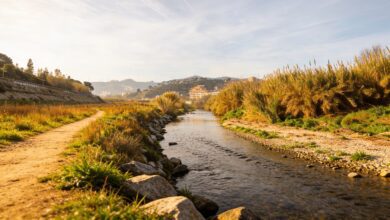
The musical life of Valencia is closely linked to the traditions of local wind ensembles and a well-developed music education system. The region boasts the highest number of music societies in Spain, creating a unique environment for training professional performers. The city is home to two major orchestral institutions: the municipal Orquestra de València and the independent Palau de les Arts ensemble, founded twenty years ago by Lorin Maazel. Both ensembles are based within cultural complexes on the grounds of the former Turia riverbed.
In recent years, Spanish orchestras have appeared more frequently on international stages. For example, the Orquestra de Galicia recently launched an extensive tour in the United Kingdom, and European promoters have shown increased interest in Spanish ensembles. As noted by El Pais, despite financial challenges, Spanish musicians are actively taking advantage of new touring and collaboration opportunities.
Significance for Valencia
The OV’s participation in the Vienna concert was part of the València Music City program aimed at promoting the city’s musical brand abroad. According to project director Juan Pablo Valero, these performances help strengthen Valencia’s image as one of Europe’s leading music centers. Musicians from the region regularly perform in the world’s top orchestras, and local wind music traditions are well known far beyond Spain.
Amid growing interest in Spanish culture, the emergence of new music projects and tours has become a notable trend. Recently, for instance, a television show featuring celebrity guests drew a record audience, confirming the high demand for cultural events. Learn more about changes in Spanish broadcasting in the article about new faces and records on television.
In recent years, Spanish orchestras have increasingly participated in major European festivals and concert series. For example, performances at the Tonhalle in Zurich, participation in Tage der Neue Musik, as well as concerts within the Schleswig-Holstein Musik Festival and Ravello Festival have allowed ensembles from Spain to make their mark on the international stage. Such events not only strengthen the country’s position in the world of classical music but also contribute to the development of cultural tourism and foster experience exchange among musicians from different countries.