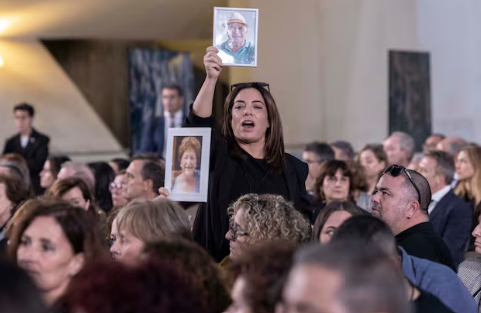
A farewell ceremony for the victims of the recent disaster was held in Valencia. What began as a solemn event unexpectedly triggered a political crisis within the regional branch of the Partido Popular (PP). The atmosphere was tense: the victims’ families openly voiced their anger toward the regional authorities. As a result, Carlos Mazón, head of the Valencian Community’s government, now finds his position under serious threat.
Key party figures attended the event, including Alberto Núñez Feijóo, who was seated just a few rows away from Mazón. For many PP members, this was a real trial by fire. For the first time in a long while, the party elite faced open discontent—not just from the public, but also from within their own ranks.
Internal Party Pressure and the Role of Allies
After the ceremony, the party launched heated discussions about Mazón’s future. Many influential PP members are convinced his resignation is only a matter of time. However, the situation is complicated by the fact that Mazón holds his position with support from Vox. Any attempt to replace the leader requires their ally’s agreement, but Vox representatives have instead fiercely defended the current president. This has further heightened tensions between the two political forces, who already struggle to find common ground.
In recent days, Feijóo has taken steps to regain control over the situation, urging Mazón to provide explanations before parliamentary committees regarding his actions on the day of the tragedy. Nevertheless, within the party, there is a growing conviction that Mazón’s continued presence in office could lead to a loss of power in the region. The option of early elections is being considered, but raises concerns: even with favorable forecasts, no one can guarantee retaining the majority.
Anticipation of Change and Uncertainty
So far, Mazón has not announced any intention to resign, but his circle admits that the situation is extremely difficult. In the coming days, he is expected to appear before several parliamentary hearings, where he will have to answer uncomfortable questions. Within the PP, there is a sense of anticipation: many believe that change is inevitable, but no one is willing to predict exactly when it will happen.
The funeral in Valencia became not just a moment of mourning, but a starting point for a new phase of political struggle in the region. Questions remain about Mazón’s future and the stability of the coalition, as tensions within the party continue to rise. In the coming weeks, it will become clear whether the PP leadership can find a way out of the crisis or if new upheavals await the region.