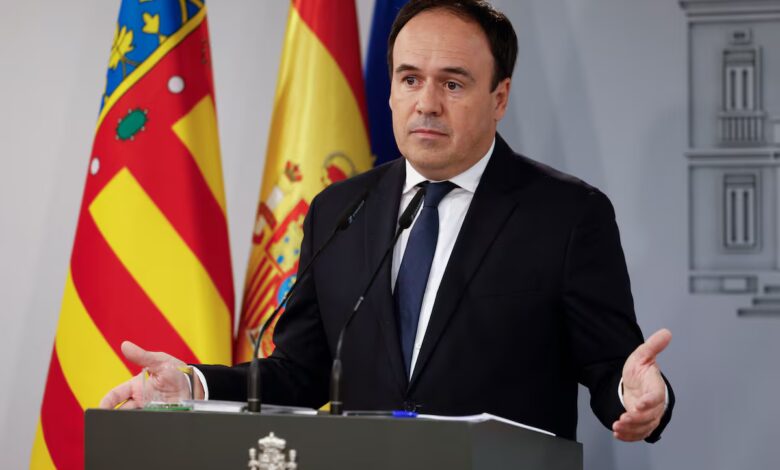
On Monday, the National Council of the Partido Popular (PP) decided to establish an interim management commission for the party’s branch in the Valencian Community. Juanfran Pérez Llorca, who was recently ratified as the regional president, has been appointed as the new leader. This unexpected move marks a new phase in the regional party’s leadership following the recent resignation of Carlos Mazón.
The commission includes key figures from the regional political scene. Carlos Gil, a national parliament deputy and mayor of the small town of Benavites, was appointed secretary. Gil is seen as a close ally of provincial party leader Vicente Mompó, as well as president of the Valencia Provincial Council.
New faces and roles
Former PPCV leader Carlos Mazón did not receive a position in the new executive body. The commission’s coordinator is Juan Carlos Caballero, who serves as the PP spokesperson on Valencia City Council. Caballero has the full confidence of city mayor María José Catalá. Oversight of party rights and guarantees now falls to the mayor of Torrevieja, Eduardo Dolón.
Management of the electoral committee has been entrusted to Esteban González Pons, the party’s representative in Brussels and vice-president of the European Parliament. His appointment highlights the central leadership’s efforts to balance the interests of different PP factions and curb the influence of the Alicante wing that supports Pérez Llorca and Mompó.
The reasons behind the changes
Pérez Llorca had previously supported Mompo’s bid to head the PPCV’s list for the 2027 elections, as part of a strategy to keep Mazón at the helm of the regional government. However, the party’s central leadership did not endorse this approach. After news broke about a meeting between Pérez Llorca, Mompo and other provincial leaders discussing Mompo’s candidacy, Mazón resigned.
In response to the crisis, the PP leadership decided to take control of the situation in coordination with Pérez Llorca. Instead of replacing the leadership immediately via the executive committee as originally planned, they opted to create a temporary management commission.
Strategy and stabilization
Following Mazón’s departure, Valencia mayor María José Catalá advocated for the formation of an interim commission until the next regional congress. She did not support the idea of an immediate change of leadership through the executive committee. Catalá and González Pons joined forces to stabilize the party and seek balance among the different influential groups.
The interim commission was tasked not only with restoring unity within the regional branch, but also with preparing the party for future elections. The new management structure reflects the PP national leadership’s attempt to broaden representation and reduce tensions between the party’s various factions.
Looking ahead
The establishment of a steering committee came as an unexpected move, shifting the balance of power within the Valencia branch of the PP. The party is now preparing for a new phase, where key decisions will take into account the interests of various regional leaders. In the coming months, it will become clear how effective this new management model is and how it will impact preparations for the next elections.