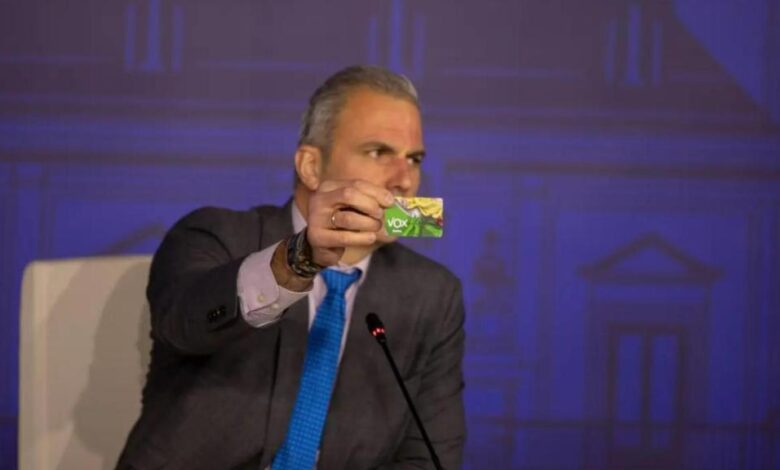
Internal party disputes within Vox have reached a new level after the fate of Javier Ortega Smith was placed in the hands of five members of the Guarantees Committee. This decision could affect not only the balance of power in Madrid’s city government but also the public perception of transparency within one of Spain’s most talked-about political parties. Concerns over the independence of this committee have intensified recently, as party leadership insisted on suspending Ortega Smith from his position, and the committee promptly suspended his membership.
The composition of Vox’s Guarantees Committee has long remained largely inaccessible to the public. According to Ale Espanol, in 2025 the committee included Gema Pilar Herrero Monroy (chair), Eduardo Luis Ruiz Navarro (deputy), Pablo Juan Calvo Liste (secretary), Jose Francisco Garre Isquerdo (member), and Marcela Reijia Vales (member). Each has ties to the party through various roles, ranging from former deputies to active municipal representatives and legal experts. For example, Herrero previously worked for the ArroyoMolinos municipal council, while Ruiz Navarro was a deputy from Alicante and held a post in the government of Carlos Mazón.
Questions about independence
The leadership of Vox presents the committee as an independent body, but former party officials question its true autonomy. In their view, the committee’s decisions always align with the leadership’s position, raising doubts about the organ’s actual independence. Currently under consideration are not only the case of Ortega Smith but also disciplinary proceedings against Carla Toscano and Ignacio Ansaldo, who were also temporarily suspended for supporting their colleague.
Spanish law requires transparency regarding the composition of such bodies, yet in Vox’s case, this information is not always available. This situation fuels debates about internal democracy and oversight mechanisms within parties. Observers note that such conflicts can shift the balance of power not only within the party itself but also in city councils where Vox holds key positions.
The committee’s role and its consequences
Decisions by the Committee of Guarantees can affect not only the careers of individual politicians but also the party’s overall strategy. In the case of Ortega Smith, a fundamental question is at stake: who sets the rules within the party, and how transparent are those rules to society? Looking back at other high-profile cases, it is worth noting that such internal investigations often become catalysts for public debate about trust in political institutions.
In recent years, Spain has already experienced situations where internal disputes within organizations have led to serious consequences. For instance, in the case of ICAVI in the Canary Islands, a government official was forced to resign following a sexual offense case, as detailed in the article about the high-profile consequences for regional institutions.
Context and trends
In recent years, there has been a rise in cases in Spain where internal party bodies come under the spotlight due to decisions impacting the fate of prominent politicians. Such processes are often accompanied by debates about transparency and independence, as well as criticism from former members and experts. The question of how independent these committees truly are remains unresolved and sparks lively public debate.
Similar situations have occurred in other parties across the country: disciplinary measures, temporary suspensions, and internal investigations have prompted discussions about standards of political ethics. These developments highlight the importance of transparency and trust in institutions, especially amid growing political competition and rising public demand for integrity.