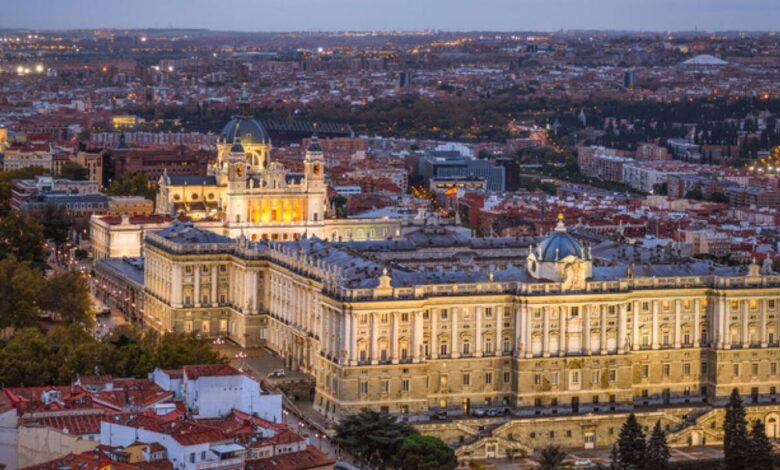
At the very heart of Madrid lies Distrito Real—a district that brings together everything the Spanish capital is proud of in a relatively compact area. Last year, millions of visitors came here, and it’s no wonder: in just one day, you can walk through the pages of history, architecture, and art.
Your journey through the neighborhood begins at the impressive Royal Palace. This vast complex, built after a fire in the 18th century, now hosts state ceremonies. Inside, you’ll find halls where the fate of the country was once decided, collections of clocks, porcelain, weapons, and, of course, lavish interiors. Even if you’re short on time, a couple of hours are enough to see the highlights: the throne room, royal chapel, armory, and kitchens adorned with frescoes and tapestries.
Nearby is a modern gem: the Royal Collections Gallery. Recently opened, it’s set into the hillside leading to Campo del Moro park. Here you’ll find tens of thousands of artworks spanning five centuries of Spanish monarchy. The permanent exhibition covers the Habsburg and Bourbon dynasties, while temporary displays offer fresh perspectives on history. An interesting fact: during construction, remains of an ancient 9th-century Arab wall were discovered.
But what is a palace without gardens? Two historic parks — Campo del Moro and Sabatini — are open to everyone. The first, with its romantic pathways and peacocks, stretches down to the Manzanares River. The second, more formal and symmetrical, is adorned with fountains and statues of Spanish kings. A walk through these gardens is an excellent way to see the palace from a unique perspective and find solitude right in the heart of the city.
Plaza de Oriente is another landmark of the area. Here, the palace and the theater meet, and at the center rises the statue of Felipe V on horseback — the world’s first equestrian statue supported only by the horse’s hind legs. On Wednesdays and Saturdays, you can witness the changing of the guard: the ceremony with guards and horses draws crowds of spectators. Once a month, except during summer holidays, Plaza de la Armería hosts an impressive show featuring hundreds of military personnel in historical uniforms.
The religious side of Distrito Real is no less impressive. The Almudena Cathedral, built in the 19th century, towers opposite the palace. Entrance is free, but for an extra fee you can go up to the dome or down to the crypt. In the neighborhood there are two convents still inhabited by nuns. One of them, La Encarnación, holds hundreds of relics, while Las Descalzas houses a collection of ten thousand works of art, including tapestries designed by Rubens and paintings by Titian. Both buildings were once palaces, as can be seen from their facades and staircases.
Teatro Real is the heart of Madrid’s musical life. Since the mid-19th century, it has hosted operas, ballets, and concerts. The auditorium seats nearly two thousand people, and its program is always filled with world-class names. The best way to end your day is on the viewing platform between the gallery and the palace: from here, you get a sunset view that will stay with you for a long time.
If you have more time, it’s worth venturing beyond the city center. The surroundings of Madrid boast three more royal residences: El Escorial, Aranjuez, and El Pardo. Each one represents a distinct chapter in the history of the region and the country.
The Distrito Real project is being carried out with the support of regional and city authorities, as well as the hospitality sector. This is more than just a tourist route; it’s an attempt to showcase Madrid from a new perspective—through its royal heritage and cultural riches.