Alejandro Amenábar’s new film El Cautivo plunges viewers into one of the most dramatic and little-known periods of Miguel de Cervantes’ life—his five-year captivity in Algiers. To authentically recreate the atmosphere of the 16th century, the film crew journeyed through the picturesque corners of the Valencian Community. In the province of Alicante and its surroundings, ancient castles, natural landscapes, and entire towns were transformed beyond recognition, becoming the backdrop for this historical drama.
More than just a biographical sketch, the film promises a profound exploration of how these ordeals may have shaped the creative mind of the future Don Quixote author. Amenábar chose filming locations steeped in history, creating an extraordinary sense of presence that transports the audience centuries into the past, into the turbulent, perilous world of Mediterranean piracy.
Spanish landscapes stand in for Algiers
To transform modern Spanish locations into 16th-century Algiers, Amenábar’s team undertook a monumental task. The main filming took place in the Valencian Community, where every corner was carefully selected for specific scenes. The Santa Pola Castle became the perfect setting to recreate military environments and the somber interiors where prisoners languished. The majestic Santa Bárbara Castle in Alicante, with its panoramic views, served as a backdrop for market squares and symbolized the power of local rulers.
The natural landscape also played its part. The Cova dels Arcs cave in Benitatxell, with its picturesque coastline, stood in for Algerian scenery. The medieval quarter of Bocairent, with its narrow, winding streets, was transformed into a bustling Algerian bazaar. Nearby caves near Xàbia were used to film escape scenes and moments filled with hope for freedom. Meanwhile, the castle in Buñol hosted the slave market scenes, capturing all the tragedy of the era.
Palatial splendor was not overlooked. The Palace of the Counts of Cervellón in Anna, often called the ‘Valencian Alhambra,’ provided its interiors for court scenes. To add even more scale and authenticity to the pasha’s palaces, the crew traveled to Seville to capture the grandeur of the Reales Alcázares, with their famous courtyards and hammams. Some interior scenes, such as the barber shop, were filmed on the Ciudad de la Luz studio sets in Alicante.
History and Fiction
The plot of ‘The Captive’ is based on true events. Miguel de Cervantes was indeed held captive in Algiers for five years, from 1575 to 1580, after his ship was seized by Barbary corsairs in the Mediterranean. Historical records confirm he made several escape attempts. However, Amenábar’s film is more than a strict historical account. The director introduces elements of fiction to explore how this traumatic ordeal may have inspired the ideas that later shaped Cervantes’ masterpiece, ‘Don Quixote.’
To heighten the drama and enrich the story, fictional characters were added to the script, and some dialogues and scenes were created specifically for the film. This approach not only retells the story of captivity but also offers a glimpse into the mind of a genius on the brink of despair and creative revelation.
Cast
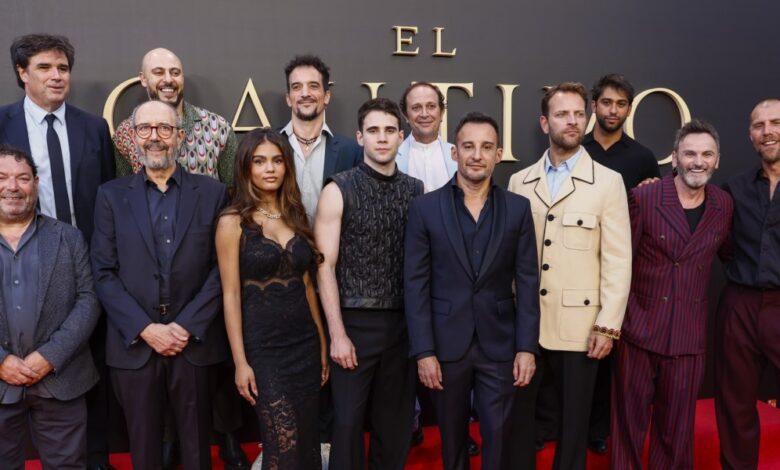
A stellar cast of Spanish and international film stars was brought together to portray both historical and fictional characters on screen. The role of the young Miguel de Cervantes is played by Julio Peña. His antagonist, Pasha Hasan, is portrayed by Italian actor Alessandro Borghi. The film also features acclaimed Spanish actors such as Miguel Rellán, Fernando Tejero, José Manuel Poga, and Roberto Álamo, each contributing to the movie’s complex and tense atmosphere.
Alicante: The Filming Location
Alicante province has long established itself as a favorite destination for filmmakers from around the world. Its diverse landscapes—from picturesque beaches to rugged mountains—as well as modern audiovisual complexes, make this region an ideal filming location. In addition to “The Captive,” notable productions such as Juan Antonio Bayona’s disaster film “The Impossible” and even episodes of the hit series “The Crown” have been shot here. The Ciudad de la Luz studio complex, iconic sites like Tabarca Island, San Juan beaches, and Santa Bárbara Castle itself have repeatedly appeared on the big screen, proving Alicante’s cinematic versatility.
Alejandro Amenábar, by the way, is a Spanish-Chilean director, screenwriter, and composer recognized as one of the most talented filmmakers of his generation. He gained international fame with films like the supernatural thriller “The Others” starring Nicole Kidman and the drama “The Sea Inside,” which won the Oscar for Best Foreign Language Film. Amenábar is known for his versatility across genres, from psychological dramas to large-scale historical epics such as “Agora.” Hallmarks of his style include deep psychological insight and meticulous attention to detail, as well as the fact that he often composes the music for his own films.