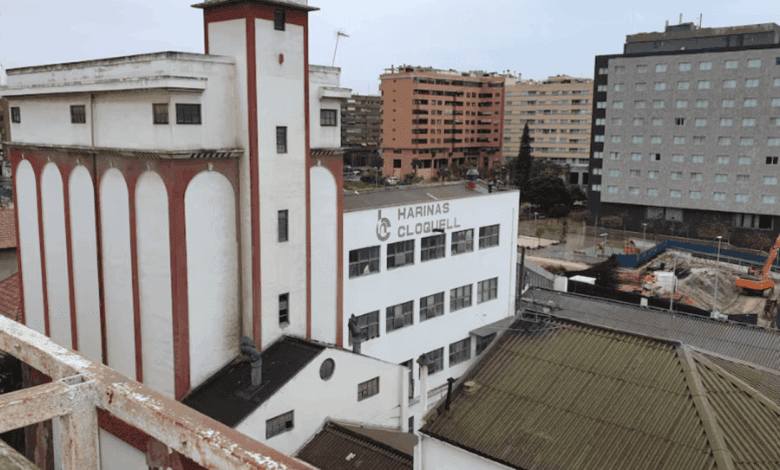
In the southern part of Alicante, where the city meets the port and one of its main transport arteries, a vacant lot has stood for years. Here, on the site of former wastelands, a modern residential district was meant to rise, envisioned as the final piece completing the historic Benalua neighborhood. But even though plans for development were approved back in the late 1990s, the area remains unfinished. The main obstacle: two old flour mills, Cloquell and Bufort, which continue to be a sticking point for both city authorities and investors.
It has been three decades since the project was launched. In that time, modern white and grey apartment buildings have sprung up around the factories, aimed at affluent buyers. Yet life in the new district has yet to pick up: the streets remain empty, there are no shops or cafés, and most apartments have been purchased by investors who are in no hurry to move in. All development has stalled in one quarter — the very one where the two historic mills, built in the 1930s, still stand.
A legacy of history
Local residents fear the situation may drag on for many more years. According to the head of the neighborhood committee, the factory buildings are gradually falling into disrepair, with no decision on their future in sight. Cloquell and Bufort are the last reminders of Alicante’s industrial past, when grain arrived here by train from Castilla-La Mancha and flour was shipped across the country. Architect Miguel López designed both buildings, which became icons of the city’s industrial boom in the 1930s and 1940s.
In the 1950s and 1960s, the factories expanded: Cloquell acquired a new grain storage facility, while Bufort added extra warehouses. Production at these sites continued until 2021 and 2023, after which the owners agreed to relocate. Initially, both buildings were to be demolished to make way for new housing, but in 2022, under pressure from the public and the architectural community, a decision was made to preserve them as monuments of industrial heritage.
Urban planning
The fate of the factories now depends on complex negotiations between the municipality and the owners. As a result of discussions, it was decided that the Cloquell building would become city property and be used for public purposes, while Bufort would remain with its current owners and be repurposed for commercial use. On the surrounding land, a six-story residential complex and a sixteen-story tower are planned, with the tower set to become an architectural landmark at Alicante’s southern entrance.
At the same time, there are talks about creating a green space and improving access to the Benalúa school located across the street. However, a final decision on how exactly the factory buildings will be used has not yet been made. Proposals include opening a hotel, offices, temporary accommodation for professionals and students, and establishing either a digital technology museum or an ethnographic center dedicated to the city’s history.
Expectations and prospects
During the last election campaign, the mayor of Alicante proposed moving the music and dance conservatories, which are currently scattered across the city, into one of these buildings. However, this option has not yet been approved, and the future of the factories will depend on the new master development plan, which is still pending approval. The current plan was adopted back in 1987 and is considered one of the most outdated in Spain.
The district development project was originally divided into two phases: the first included all plots except for the factory grounds, while the second focused specifically on the quarter with industrial buildings. If no additional obstacles arise, construction in this area could begin in 2027 and finish by the end of 2028. The first stage will involve dismantling old roofs and utilities containing asbestos, which can only be done during the summer when the school is closed for the holidays.
Real estate market
Meanwhile, the first phase of construction is nearly complete. Modern residential complexes have sprung up here, with apartments selling for around 400,000 euros for 80 square meters. According to representatives of the local community, most buyers are foreigners—especially from the United States—as well as Spaniards drawn by the proximity to the city center, the port, the school, and the airport, which is just a 15-minute drive away.
Despite its appealing location and modern architecture, the neighborhood has yet to truly come to life. All eyes are on the fate of the two factories, which will determine when Benalúa Sur will finally be complete and vibrant.