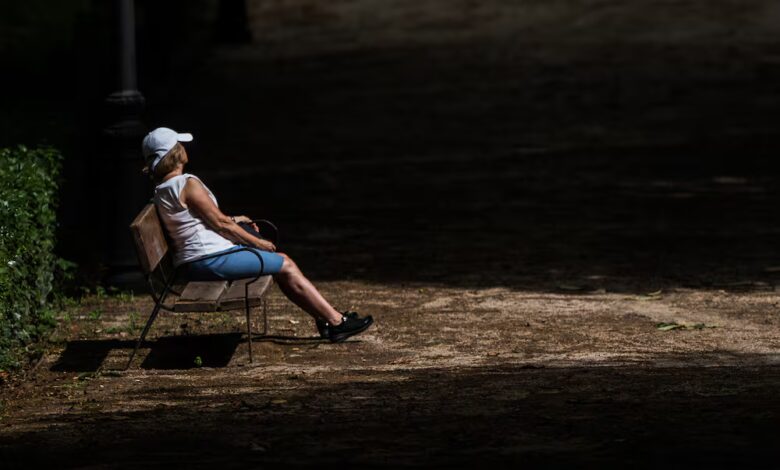
On one of those rare days off, when everything seemed unimportant and the city felt too fast, I decided to do something I hadn’t allowed myself for a long time: simply sit on a bench. No phone, no reason, no rush. It turned out that just stopping amidst the crowd of people rushing by, noticing neither the sun, the wind, nor each other, feels almost heroic.
At first, it felt awkward. It seemed like everyone was looking at me in surprise: why just sit there for no reason? But after a few minutes I started noticing details that usually slip by—leaves swirling in the air, tree shadows, the faces of passersby hurrying as if running late to an important meeting. Time seemed to slow down, and that sense of freedom felt almost forgotten.
A city without pauses
Less than an hour had passed when a neighbor from next door approached me. He asked if everything was alright, as if sitting on a bench was a sign of trouble or something odd. His look was puzzled—who just sits outside these days? In Madrid, the bench stopped being a place to rest a long time ago—it’s more of an exception now than the rule.
Streets have become corridors for haste rather than spaces for meeting and conversation. People prefer cafés and bars, where you have to pay for the privilege of sitting down. Free benches are seen as relics of the past, and sometimes even as a challenge to social norms. My acquaintance quickly left, unable to make sense of my behavior, while I stayed, feeling just a little bit rebellious.
Memories of the past
In our youth, benches were the center of life. People would discuss the news, share secrets, laugh and mourn on them. Every neighborhood had its own “favorite” spot where friends met, gatherings took place, and sometimes people fell in love. Benches witnessed first confessions, long conversations, and unexpected revelations.
Over time, everything changed. People could afford cafés, got their own apartments, and city benches started to seem unnecessary. The authorities restricted public gatherings, banned noisy groups, and the benches themselves began to disappear. Single chairs replaced them so no one would linger for too long, while restaurant and bar terraces took their place.
The Bench as a Symbol
Today, the bench is almost an artifact. It’s seen as something outdated, suitable only for retirees or those with no other choice. But it’s precisely these simple things that bring a city to life. A bench offers a chance to pause, catch your breath, meet a friend, or simply watch life go by.
In modern Madrid, benches are disappearing not only physically, but also from the habits of the city’s residents. People no longer stop, rest, or look around. More and more, the street is just a route from point A to point B, not a place to live. The bench has become a symbol of what we are losing in our chase for speed and efficiency.
A City for People or for Customers?
Once, the streets were filled with conversation, laughter, and spontaneous encounters. Now, those same spaces are occupied by café tables, where every meter is monetized. Free benches are replaced by commercial interests, and the city increasingly resembles a shopping mall, where everyone is expected to be a customer rather than just a resident.
Perhaps that’s why it has become so difficult today to simply sit and do nothing. Such behavior is seen as odd, almost as a challenge to the system. Yet it is in these moments that we truly feel like part of the city, not just visitors passing through.