The issue of banning the burqa and other face-covering veils is once again at the center of attention in Spain. Decisions made at the municipal level are already changing the rules for residents and visitors. For many, this is not just a debate about religion or tradition, but also about security, rights, and the powers of local authorities.
The national parliament did not support a complete ban on the burqa in public places. However, some municipalities in Madrid have already introduced their own restrictions. Now, local authorities decide who can enter administrative buildings and under what conditions if their face is fully covered.
Local decisions
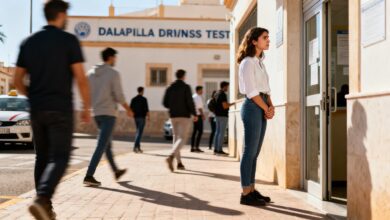
In the city of Alcalá de Henares, governed by Partido Popular and Vox, a new regulation has been adopted. Entry to municipal buildings is now prohibited for those who conceal their faces, for example, with a burqa or niqab. Exceptions are made only for medical reasons, sanitary requirements, or work situations where covering the face is necessary for safety.
The main goal is to ensure personal identification when visiting institutions. This applies to document processing, accessing services, and other situations where it is important to know exactly who is present. Authorities refer to the Constitution and laws that grant cities the right to set internal regulations for safety and order.
However, the new restrictions do not apply on city streets. Municipalities acknowledge they cannot regulate how people look outside their buildings. So, the measures only concern control within administrative premises.
Experience of other cities
A similar ban has long been in effect in Galapagar. Since 2010, entering municipal buildings with a completely covered face has been prohibited there. Over all this time, no fines have been issued, and there have been no real consequences for residents. Nevertheless, the possibility of restricting access on these grounds has remained in place under various local governments.
Other cities in the Madrid region are not rushing to introduce similar measures. However, discussions are underway, and some municipalities are closely watching how the situation develops. The question of where individual rights end and security requirements begin remains unresolved.
Parliamentary debates
In the national parliament, Vox’s initiative did not pass. Only representatives of the Partido Popular supported it, while most parties opposed the measure. Opponents argued that such policies might violate European standards and increase social tension. Some deputies proposed their own regulatory options, but these received minimal support.
As a result, the issue of a national burqa ban remains unresolved. The political and legal debate has now shifted to the level of cities and autonomous communities, where authorities are deciding how to balance citizens’ rights with security requirements.
Context and similar cases
In recent years, Spain has repeatedly debated restrictions on religious clothing. In Cataluña and some cities of Andalucía, there have been attempts to introduce similar bans, but these efforts have often faced legal challenges. European courts have considered complaints about such measures in various countries more than once, and the rulings have been mixed. In some cases, the courts upheld the right to security, while in others they protected freedom of religion. In Spain, the issue remains contentious, and new local decisions could spark further disputes and legal proceedings.