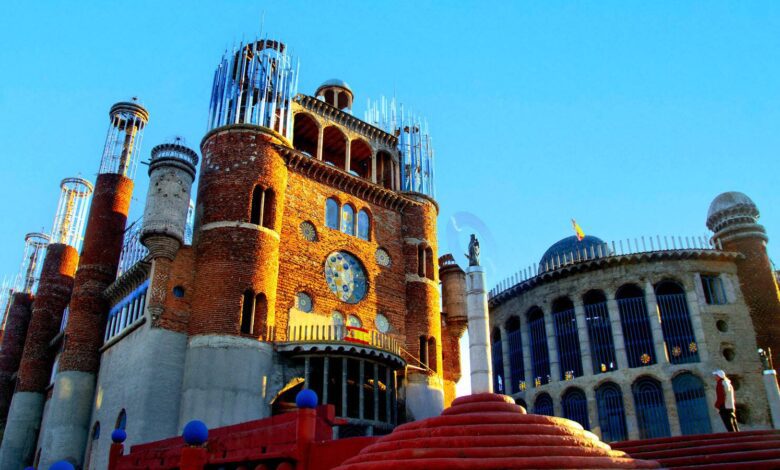
The abrupt decision to close the unusual building in Mejorada del Campo came as a surprise to many in Spain. This site had long stood as a symbol of individual initiative and perseverance, and now finds itself at the center of an administrative dispute. Concerns over safety, legality, and the building’s future are troubling not just locals, but also everyone who has followed the story of this remarkable place.
Municipal authorities have suspended all activity inside the building until the necessary documentation is completed. The move is directly linked to the lack of an approved architectural plan and an official license to use the facility for public purposes. Now, the fate of the building depends on how quickly all legal formalities can be resolved.
The story behind its construction
The unusual church, known as the ‘Cathedral Dream,’ began construction in 1961. It was built by a former farmer with neither architectural training nor official blueprints. He worked almost alone, using improvised materials and knowledge gained from books and observing other churches. Over time, the small chapel expanded into a vast structure with a dome and tall vaults reminiscent of classic European cathedrals.
After the creator’s death in 2021, the building came under the management of a charity, which took on the responsibility to complete the construction and use the space for social purposes. Over the years, the church has become not only a tourist attraction but also a venue for supporting those in need.
Reasons for closure
The municipality found no structural problems or risks to visitors. However, the lack of an official project, approved by the Colegio de Arquitectos de Madrid, became the formal reason for prohibiting any events. The inspection was triggered by a request from a foundation that planned to hold an exhibition in the building. During the process, it turned out that there were no permits, and the authorities were forced to launch administrative proceedings.
As a result, all public and social projects previously held within the church walls were put at risk. The organization managing the building is now forced to seek alternative venues to continue its work. For many locals and visitors, this came as a real blow, as the church has long been a part of the community’s identity.
Social role
Although the building is often called a cathedral, it does not have official church status. After being handed over to the charity, it became a food distribution center and a gathering place for local residents. Tourists came here to admire the unusual architecture and learn the creator’s story. Now all these activities have been temporarily suspended.
The building covers more than 4,000 square meters, with the dome rising 35 meters high. The construction used materials left over from nearby industrial sites. Thanks to advertising campaigns and coverage in foreign media, the church has gained recognition far beyond Spain. However, the site’s future depends on how quickly all necessary permits can be obtained.
Similar cases
In recent years, homemade structures that turned into popular attractions have repeatedly sparked debate in Spain. In some cases, authorities demanded demolition or reconstruction if building codes were not followed. Sometimes, after lengthy negotiations and paperwork, such sites managed to become legal. These stories often provoke lively public discussion and prompt authorities to reconsider rules for unique buildings.