In the province of Burgos, in the heart of the autonomous community of Castilla y León, stands one of the best-preserved medieval fortresses in Spain. This historic site, closely linked to the legendary figure Rodrigo Díaz de Vivar, better known as El Cid Campeador, is a unique architectural monument that has withstood centuries and multiple changes of ownership.
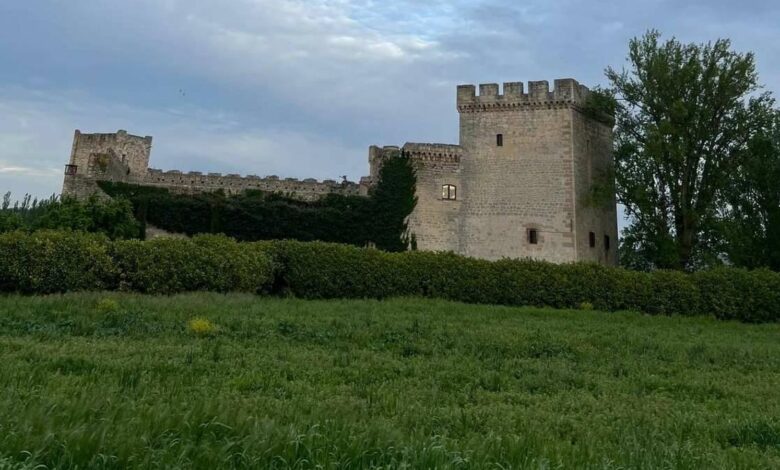
This is the Castillo de Sotopalacios, also known as the Palacio del Cid. The main part of its structure dates back to the 14th–15th centuries. Local legends claim that this was the site of the ancestral home where the famed Castilian nobleman was born. However, no documentary evidence has been found to support this. Nevertheless, historical research suggests that the Díaz de Vivar family did in fact own land and property nearby, including mills on the río Ubierna.
The castle features a typical square layout for its time, with corner towers and a central courtyard surrounded by residential and utility buildings. Over the centuries, the fortress passed into the hands of influential aristocratic families such as Manrique de Lara, Padilla, Lerma, and Medinaceli. Successive owners introduced new architectural elements, gradually transforming the stark military stronghold into a more comfortable palace. At one point, the castle was even surrounded by a moat fed by the river.
However, the site’s history was not always kind. In the 19th century, it served as a gunpowder warehouse, which negatively affected the structure’s condition. Later, the castle was plundered as local residents took its stones to build their own homes. By the early 20th century, it was in ruins. New life was breathed into the fortress by chemist César San José Seigland, who acquired it and began a large-scale, albeit partial, restoration. Thanks to his efforts, the main structures were stabilized, preventing the castle’s complete destruction. He also founded the Fundación Castillo del Cid to protect its heritage and host cultural events.
Currently, after another change in ownership, the castle is privately owned and closed to visitors. Nevertheless, it remains one of Burgos’ most valuable historical monuments and an important symbol, inseparably linked to the immortal legend of El Cid Campeador. Its majestic silhouette continues to dominate the surrounding landscape, serving as a reminder of the region’s rich historical past.