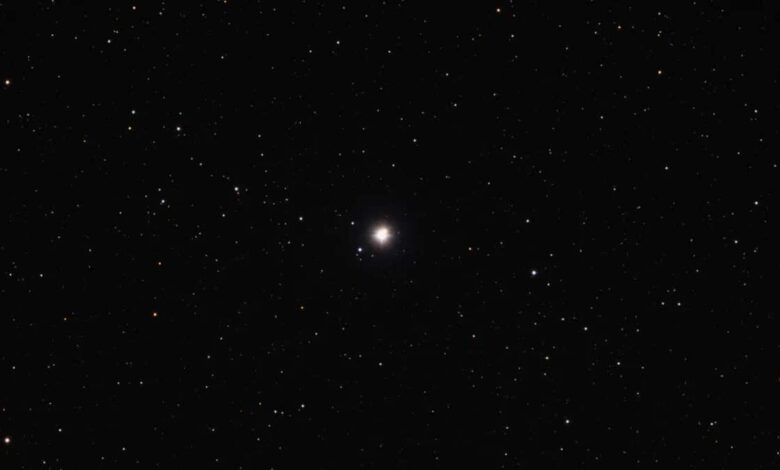
Binary System: Structure and Characteristics
Eta Cassiopeiae is one of the closest binary stars to Earth, visible even without a telescope. It consists of two stars: a G-type yellow dwarf and a K-type orange dwarf. The primary, Eta Cassiopeia A, has a mass almost identical to the Sun, while the secondary, Eta Cassiopeia B, is about twice as light and cooler. Their orbits are elongated, and the distance between them varies from 35 to 105 astronomical units, with a complete revolution around their common center of mass taking nearly five centuries.
The surface temperature of the primary star reaches 5,452 degrees Celsius, while the companion’s temperature ranges from 3,626 to 3,826 degrees. This combination of parameters makes the system interesting for studying the conditions necessary for the emergence of life.
Thirty Years of Observations and Data Analysis
A team of experts from the University of California, Riverside, and the California Institute of Technology conducted a large-scale study, combining nearly a thousand radial velocity measurements collected by various spectrographs over the past three decades. They added astrometric data from the Gaia mission, allowing them to refine the masses of the stars and the parameters of their movement.
To search for possible planets, scientists used computer modeling, introducing artificial signals into their analysis to simulate the presence of planets with different masses and orbital characteristics. The results showed that there are no large gas giants in the system that could be detected up to eight thousand astronomical units from the primary star. Moreover, the influence of the second star prevents such objects from stably existing at great distances.
Habitable Zone Boundaries and Life Search Prospects
Modeling showed that the region where liquid water could exist on a planet’s surface lies between 0.76 and 1.8 astronomical units from Eta Cassiopeia A. Within this zone, planetary orbits remain stable for millions of years, creating favorable conditions for the formation of small rocky planets potentially similar to Earth.
The lack of massive gas planets can be explained by the evolutionary features of binary stars: a closely situated companion destroys the protoplanetary disk, preventing the accumulation of material necessary for giant planet formation. Nevertheless, conditions for the emergence of Earth-like worlds remain intact.
The Future of Research and New Technologies
Although no exoplanets have been discovered in the system so far, scientists believe that future telescopes like LUVOIR and HabEx may reveal potentially habitable worlds around Eta Cassiopeia. The system remains one of the most promising targets in the search for life beyond the Solar System.
The discovery of a habitable zone in this binary star highlights the importance of comprehensive observations and modeling for understanding planet formation and assessing their potential for life.
If you didn’t know: Who is Stephen R. Kane?
Stephen R. Kane is a renowned American astronomer specializing in the search for and study of exoplanets, as well as analysis of habitable zones around various types of stars. He works at the University of California, Riverside, and actively collaborates with leading scientific institutes in the United States. Kane is considered one of the top experts in modeling planetary systems and evaluating their potential to support life. His research spans a wide range of topics — from the dynamics of binary stars to the properties of exoplanetary atmospheres. In recent years, he has published dozens of scientific papers dedicated to the search for potentially habitable worlds. Kane is also involved in developing new methods for analyzing astronomical data and consults international projects focused on finding life beyond Earth. Thanks to his contributions, the astronomical community is gaining more precise tools for evaluating the prospects of discovering life outside our planet. His work drives the development of new technologies and broadens the horizons of modern exoplanetary research.