Deep beneath the surface of the ancient Siljan crater in Sweden, scientists have discovered unique forms of life capable of surviving in conditions similar to those on Mars. This finding adds new weight to the idea that underground ecosystems could be the key to solving the mystery of life beyond Earth.
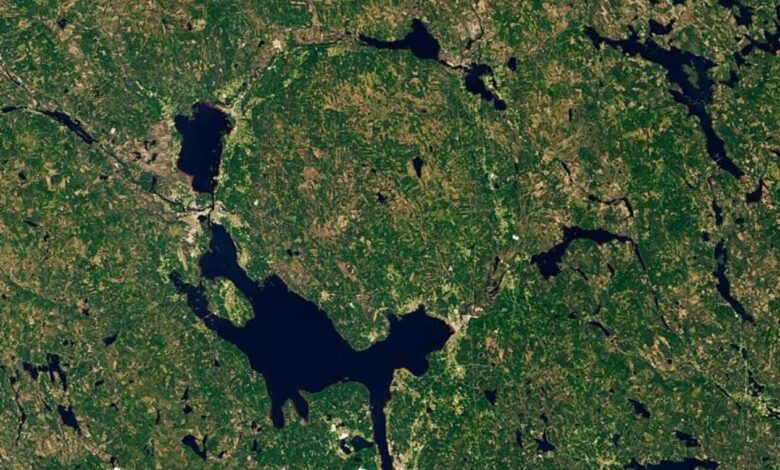
The study took place in an area where a giant asteroid once struck, leaving behind a crater more than 50 kilometers wide. Over millions of years, its outline has softened, but lakes still ring the crater’s edges, forming a distinctive circle. Drilling was conducted here as early as the last century, and one well, plunging to a depth of 380 meters, became the focus of researchers from Sweden, Finland, and the United States.
During the expedition, scientists collected water and oil samples from the crater’s deeper layers. In the lab, they recreated the pressure and temperature found at 380 meters below ground and added various nutrients to test whether any living organisms were present. The results exceeded expectations: after the addition of methanol and oil, microbes began to show active signs of life.
Microorganisms capable of living without light and oxygen
Genetic analysis revealed the presence of two key species: the archaeon Candidatus Methanogranum gryphiswaldense and the bacterium Acetobacterium sp. KB-1. Both organisms are strictly anaerobic—they do not require oxygen, and its presence is even detrimental to their survival. The archaeon obtains energy from inorganic compounds, while the bacteria feed on hydrocarbons found in oil.
Particular interest was sparked by the question of how the archaea acquire the hydrogen necessary for their metabolism if none was detected in the samples. It turns out that Acetobacterium bacteria release hydrogen as a byproduct of their activity, which is actually inconvenient for them. The archaea, in turn, utilize this hydrogen, creating a symbiotic relationship between the two species known as syntrophy. This exchange allows both populations to survive in extreme conditions.
Parallels with possible life on Mars
The discovery in the Siljan crater is significant for astrobiology. On Mars, where the surface is exposed to intense radiation, low temperatures, and there is virtually no atmosphere, subsurface layers are considered the most promising places to search for life. Regolith can shield against radiation, and underground there is retained heat and increased pressure—conditions similar to those in which the Swedish microorganisms were found.
Organisms capable of living without sunlight and using the energy of chemical reactions between inorganic substances are already known on Earth. According to scientists, these forms of life could also exist on other planets if there is water and suitable chemical compounds. Craters formed by asteroid impacts can create fractures in the crust through which water circulates, providing the necessary conditions for the development of microbial communities.
Deep Research and New Horizons in Exploration
In recent years, researchers have increasingly focused on underground ecosystems, both on Earth and on other planets. The Siljan example demonstrates that even in the harshest conditions, complex microbial communities can exist, relying on the exchange of substances and close interaction between different species.
Experiments with samples taken from the crater have not only revealed living organisms but also traced their metabolic chains. This opens up new possibilities for modeling potential ecosystems on Mars and other celestial bodies. Scientists emphasize that such studies help us better understand the limits of habitability and expand our ideas about where life might exist elsewhere in the universe.
The Significance of the Discovery for Science and Future Missions
The discovery of microorganisms in the Siljan crater highlights the importance of deep drilling in the search for life on other planets. Modern Mars rovers have already detected methane emissions in Mars’ atmosphere, but it remains unclear whether these are linked to living organisms or have another origin. The experience gained in Sweden may serve as a foundation for new strategies in the search for extraterrestrial life, focusing on the study of subsurface layers.
Research into such ecosystems not only broadens the horizons of astrobiology but also offers deeper insight into processes occurring beneath the surface of our own planet. Every step forward in this field brings humanity closer to answering one of the most profound questions: are we alone in the universe?
Incidentally, the Siljan crater is the largest impact crater in Sweden, formed about 380 million years ago after an asteroid strike. Today, it serves as a unique natural laboratory for studying deep ecosystems and processes taking place within the Earth’s crust. Research conducted here by scientists from various countries has made a significant contribution to the advancement of geology, microbiology, and astrobiology. Thanks to projects like this, science is gaining new tools to search for life beyond Earth.