An innovative approach to waste recycling
A team of specialists from Kazan State Agrarian University has presented a mobile unit capable of converting manure and poultry litter into biogas and concentrated fertilizers. The team included experts in agricultural engineering and biotechnology, enabling them to combine engineering solutions with biological processes. Their development is already patented and has been tested on various types of organic waste.
The issue of manure and litter disposal is critical for livestock farms. These wastes not only pollute the environment but also contain dangerous microorganisms and weed seeds. At the same time, they are rich in valuable elements essential for soil health. Despite the large volumes, only a small portion is processed, while the rest often becomes a source of pollution.
Biogas production technology
The unit operates on the principle of anaerobic digestion—a process in which organic matter breaks down without oxygen. For this, manure is mixed with water and placed in a sealed fermenter. Inside, a stable temperature of 55°C is maintained to ensure the active work of thermophilic bacteria. This temperature regime is key for achieving the highest methane output.
A key feature of the design is its double walls with an air gap, creating a thermos effect that minimizes heat loss. The built-in control system automatically regulates temperature and pressure, and also monitors the gasification process. The resulting biogas is purified from impurities and can be used for heating, power generation, or fueling equipment.
Test Results and Efficiency
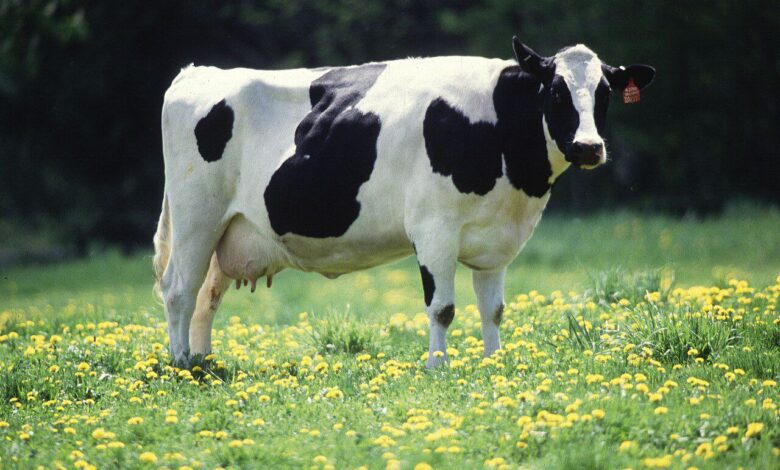
Tests showed that pig manure produces the highest volume of biogas—up to ten cubic meters per ton. Cow manure yields eight cubic meters, chicken manure seven, and horse manure five. These differences are due to the chemical composition and structure of the raw materials: pig manure decomposes more easily, while horse manure contains more hard-to-digest fibers.
After the process is complete, the installation leaves behind an organic fertilizer rich in nitrogen, phosphorus, and potassium. The high temperature destroys all pathogens, parasite eggs, and weed seeds. The fertilizer is highly bioavailable to plants and can be applied less frequently than conventional manure.
Advantages of the Mobile System
The unit’s mobility allows it to be used across different farms, which is especially convenient for medium-sized operations. There’s no need to build large stationary facilities—just transport the equipment where it’s needed. This lowers costs and makes the technology accessible to more farmers.
Automating all processes minimizes human involvement and reduces the risk of errors. The system independently maintains optimal conditions for bacterial activity, as exceeding a temperature of 55°C leads to decreased efficiency, making precise control critically important.
Environmental and economic benefits
The introduction of such units allows farms to become more energy independent. Biogas can fully meet heating and electricity needs and can also be used as fuel for agricultural machinery. At the same time, it solves the waste disposal problem without harming the environment.
The resulting fertilizer improves soil structure, helps retain moisture, and increases yields. It can be applied once every few years, reducing labor costs and expenses for mineral supplements. Thus, the new technology opens up opportunities for farmers to increase efficiency and achieve sustainable development.
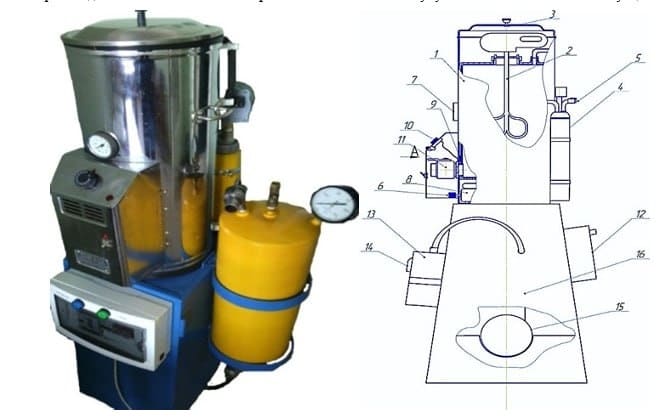
General view of the mobile biogas plant. 1 — fermenter; 2 — frame-type electric mixer; 3 — fermenter lid; 4 — small gas holder (water seal); 5 — electric contact manometer; 6 — heater switch; 7 — bimetallic thermometer; 8 — electric heater; 9 — thermoelectric transducer; 10 — temperature control regulator; 11 — biofertilizer drain valve; 12 — microcontroller; 13 — methane meter; 14 — meter display; 15 — low-speed compressor; 16 — stand
/ © Press Service of Kazan State Agrarian University