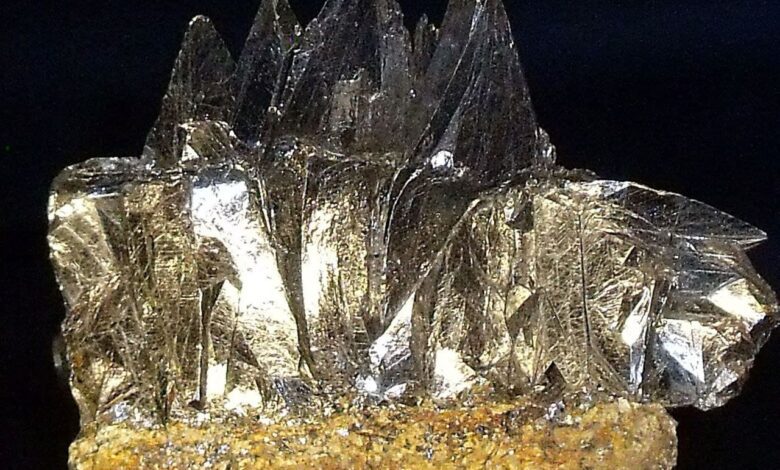
Graphite has long become an essential material for numerous industries—from battery manufacturing to the creation of flexible electronics. However, its natural form contains many impurities, which hinder its use in high-tech fields. To obtain thermally expanded graphite with unique properties, raw material with a minimal content of foreign substances is required. The problem is that traditional purification methods often damage the material’s structure, making it unsuitable for further processing.
In recent years, Russian scientists have been actively searching for solutions that not only achieve a high degree of purity, but also preserve graphite’s layered structure. This is especially important for the aviation, energy, and electronics industries, where the strictest material standards apply.
Method comparison: pros and cons of industrial technologies
During their research, specialists from Perm Polytechnic University (PNRPU) analyzed several industrial purification methods. Each has its own benefits and limitations. For example, pulsed alkaline treatment efficiently removes contaminants but requires constant temperature control, making it difficult to scale. The autoclave technique delivers record-low levels of impurities, but its extreme processing conditions destroy the layered structure—critical for further material use.
The economically attractive method using sodium salts also has its drawbacks: cleaning efficiency directly depends on strict adherence to the required temperature regime. Even slight deviations lead to reduced quality and risk of graphite damage. The sulfur-soda technology, despite its theoretical effectiveness, turned out to be too complex and costly for industrial implementation due to its multistage process and the use of aggressive reagents.
Breakthrough: Ammonium Salts Revolutionize Graphite Purification
The most promising method proved to be the one based on the use of ammonium salts. Studies have shown that precipitation with ammonium bifluoride ensures uniform reactions across a wide temperature range. This allows purity levels of up to 99.98% to be achieved without destroying the graphite structure. This approach does not require strict temperature control, significantly simplifying the process and making it more robust for industrial applications.
Computer modeling of chemical processes has enabled the identification of optimal raw material preparation parameters. This opens up the possibility of establishing a complete production cycle in Russia—from extraction to the manufacture of finished products made from thermally expanded graphite. This is particularly relevant given the need for import substitution and the development of domestic technologies.
Impact on Industry and the Future of Innovation
The introduction of new graphite purification technology could become a game changer for high-tech industries. Russian companies will be able to eliminate their reliance on imported materials and establish local production of components for aviation, energy, and electronics. Moreover, purified graphite paves the way for the development of new products—from flexible displays to efficient filtration and energy storage systems.
The emergence of affordable, high-quality thermally expanded graphite in the domestic market will accelerate innovation and boost the competitiveness of Russian industry. This will also create opportunities for new scientific and technological advancements by harnessing the unique properties of this material.
Did you know: Perm Polytechnic University and its contribution to science
Perm Polytechnic University (PNIPU) is one of Russia’s leading technical universities, founded in 1953. Over the decades, the university has become a hub for talented scientists and engineers specializing in chemical technologies, materials science, and mechanical engineering. PNIPU houses several research institutes that develop innovative solutions for industry and energy sectors. The university actively collaborates with major Russian and international companies, participates in global projects, and implements advanced educational programs. PNIPU graduates are highly sought after in the job market and hold key positions in leading sectors of the economy. In recent years, the university has focused particularly on research aimed at import substitution and increasing the country’s technological independence. Thanks to the efforts of PNIPU scientists, new materials and technologies are emerging that have the potential to transform modern industry. The university supports young researchers, providing them with opportunities to realize their own projects. PNIPU is also actively adopting digital solutions and expanding its laboratory base, enabling experiments at the highest level. Today, Perm Polytechnic University continues to strengthen its position as one of the leaders in Russian engineering science.