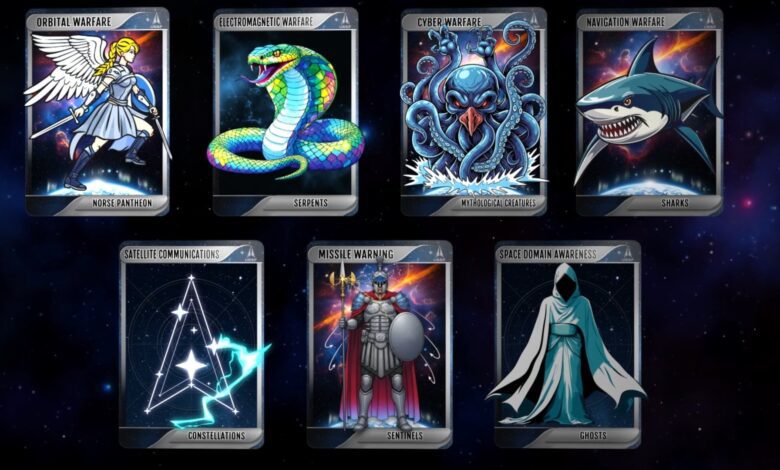
The U.S. Space Force has decided to radically change its approach to naming satellites and space systems. Each device and weapons system will now receive its own name, inspired by myths, animals, or natural phenomena. According to leadership, this move is meant not only to highlight each area of activity, but also to strengthen the corporate identity of the new military branch.
At the annual Spacepower Conference in Orlando, Florida, in December 2025, Chief of Space Operations General Chance Saltzman unveiled the new concept. He noted that each of the service’s seven key mission areas has been assigned its own thematic category to underscore the specific character and objectives of their systems. For example, orbital operations now draw on names from Norse mythology, while cybersecurity assets are named after mythical creatures.
Seven missions—seven symbols
As part of the reform, the following categories were established: orbital warfare—Norse gods, electromagnetic warfare—snakes, cyber operations—mythical creatures, navigation—sharks, satellite communications—constellations, missile warning—guardians, and space domain awareness—ghosts. Each theme reflects the essence and distinctive features of its respective field.
For example, the communications satellite previously known as Ultra-High Frequency Follow-On has been renamed Ursa Major. This constellation is traditionally associated with navigation to the north and symbolizes a constant connection to the core mission of the service. Another satellite, responsible for tracking objects in high orbits, has been named Bifrost — in Norse mythology, the bridge connecting worlds, reflecting the satellite’s role as a link between different orbital levels.
Identity and Symbolism
According to General Saltzman, the new names are intended not only to make system identification easier, but also to give each one a distinct character. Unlike familiar aircraft or tank names, spacecraft rarely become widely known to the public. Many of them are classified, complicating communication both within the military and with the public.
According to leadership, introducing vivid and memorable names will raise the public profile of the Space Force and draw more attention to its activities. In addition, the symbolism in these new names is meant to inspire service members and underscore the importance of their mission.
Myths and Reality
The selection of naming themes is intentional. For instance, Norse gods are associated with power and authority — ideal for orbital operations. Sharks symbolize precision and predatory instinct, both crucial for navigation systems. Ghosts, meanwhile, represent invisibility and stealth, qualities essential for space surveillance.
Each name carries not only symbolic meaning but also a specific mission. For example, constellations for communication satellites emphasize their role in maintaining constant contact, while guardians for early warning systems highlight their readiness to defend against threats.
Challenges and prospects
Although most space systems remain out of public sight, the new naming system aims to make them more accessible and relatable to citizens. This is especially important for the youngest branch of the U.S. armed forces, which strives to establish its own traditions and identity.
In the future, this approach to symbolism and identity is expected to be adopted by other military structures as well. There are already discussions about expanding the range of themes and introducing new categories as technologies evolve and new tasks emerge.
If you didn’t know, the U.S. Space Force was established in 2019 as an independent branch of the armed forces. Its main mission is to protect the country’s interests in space, develop satellite technologies, and ensure orbital security. General Chance Saltzman has served as chief of space operations since 2022 and is actively pursuing reforms to strengthen the service’s status and enhance its effectiveness.