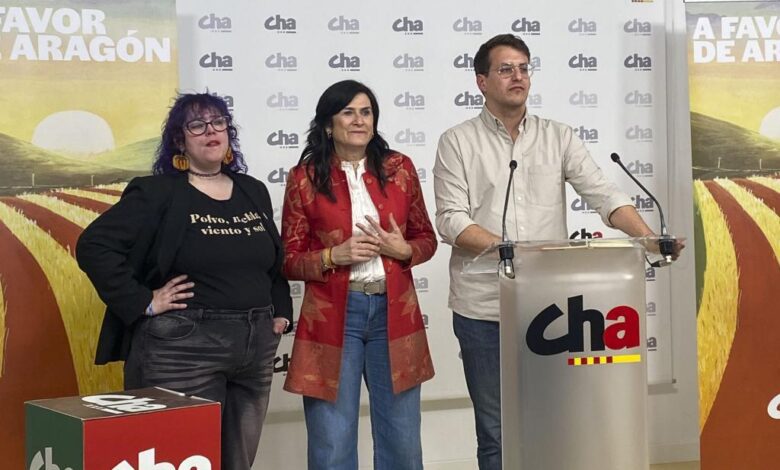
The results of the 2026 elections in Aragón have sent shockwaves through the region’s political landscape. Chunta Aragón, long overshadowed by larger left-wing forces, made a remarkable leap, increasing its parliamentary representation to six deputies. This success not only strengthened the party’s position but also cast doubt on the leadership of other alternative left movements, which now find themselves forced to reconsider their strategies.
Under the leadership of Jorge Puyo, the party not only doubled its mandates but, for the first time in many years, broke beyond its traditional electorate. Support rose by almost five percentage points compared to the previous elections, an outcome that took even seasoned political analysts by surprise. Chunta Aragón now clearly outpaces its ideological rivals — IU-Sumar and Podemos-Alianza Verde — who, by contrast, suffered serious losses and even vanished from the regional parliament.
A shift in balance
This result not only consolidated Chunta Aragón’s position within the region, but also gave the party an opportunity to make its presence felt on the national stage. For the first time in two decades, the party achieved such a significant breakthrough that its voice can no longer be ignored in the formation of new left-wing coalitions. Notably, Chunta Aragón became the only force to win mandates not only in Zaragoza, but also in other provinces, demonstrating deep territorial reach and strong support on the ground.
While IU-Sumar is left with just one deputy and Podemos loses its presence in the Cortes altogether, Chunta Aragón demonstrates resilience and growth potential. This makes it a key player in future negotiations to form a broad left-wing platform intended to replace Sumar on the national stage. Puello’s party can now claim equal footing with such regional brands as Comunes in Catalonia or Compromís in Valencia.
New challenges
However, despite the impressive result, Chunta Aragón faces serious challenges. Without the ability to form a majority together with PSOE, the party is forced into tough opposition against Jorge Azcón’s government from the People’s Party. This means the coming years will test Chunta’s strength: it will have to not only hold onto its gained ground but also prove its effectiveness as an opposition force.
At the same time, Chunta Aragón’s success has sent an alarming signal to other left-wing forces. A struggle for leadership and influence has begun within the space that offers an alternative to PSOE. Puello’s party has repeatedly shown a willingness to take bold steps, including potentially breaking with Sumar if its interests are ignored. Now that Chunta has become the flagship of the regional left movement, its demands for future coalitions will grow louder.
Competitors’ failure
While Chunta Aragón celebrates its victory, election night turned into a disaster for other players. IU-Sumar barely managed to stay in parliament, and Podemos-Alianza Verde lost all its representation. The situation is especially dramatic for the regionalists from PAR, who failed to pass even the minimum threshold and have effectively vanished from the region’s political map.
This shift in power not only changes the internal dynamics of the left but also affects national processes. Ahead lies the formation of a new left-wing platform, where regional parties like Chunta Aragón are set to play an increasingly prominent role. The question of who will become the main voice of Spain’s alternative left remains open, but Chunta’s position now appears stronger than ever.
Jorge Puyo is the charismatic leader of Chunta Aragón who managed to bring the party out of a prolonged crisis and restore its status as a key player in regional politics. His strategy of relying on local communities and emphasizing the party’s independence not only enabled Chunta to survive fierce competition but also achieve a historic breakthrough. Puyo is known for his principles and willingness to confront others for the region’s interests, making him one of the most prominent figures in contemporary Spanish politics.