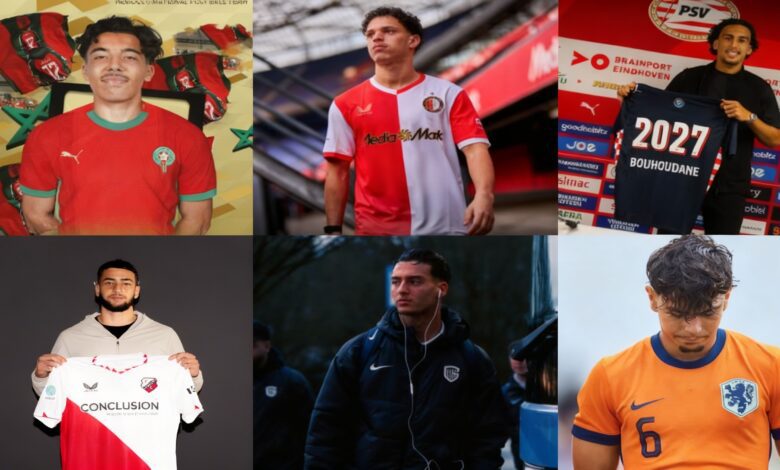
In recent weeks, the Moroccan football federation has taken a step that could shift the balance of power in world football. Within just 13 days, six young players from Belgium and the Netherlands officially changed their sporting nationality, choosing to represent Morocco. This wave of transfers not only strengthens the Atlas Lions but also raises concerns among European federations losing valuable talent. For Morocco, it’s more than just success in the transfer market — it’s a strategic breakthrough that could impact upcoming major tournaments.
Morocco’s talent development and scouting system has long gone beyond mere formality. The Mohammed VI Academy has become a true talent hub, producing players like Youssef En-Nesyri, Nayef Aguerd, Azzedine Ounahi, and Yassir Zabiri. Notably, Zabiri recently scored twice in the final of the youth World Cup against Argentina. According to RUSSPAIN.COM, it’s the combination of modern infrastructure and targeted scouting that has enabled Morocco not only to retain its homegrown talent but also to attract new stars from Europe.
A new wave
In 2026, Morocco is clear about its ambitions: the country aims to compete for the world championship title without waiting for 2030. The new head coach, Mohamed Ouahbi, who recently replaced Walid Regragui, is focusing on youth and fresh talent. In the past days, the FIFA association switch platform has seen a surge in applications: Rayane Bounida (Ajax, 2006) and Saif Eddien Lazar (Genk, 2006) gave up Belgian citizenship to represent Morocco, while Benjamin Khaderi (PSV, 2007), Ayoub Ouarghi (Feyenoord, 2008), Oualid Agougil (Utrecht, 2005), and Sami Bouhoudane (PSV, 2008) made a similar choice, leaving the Netherlands.
Most of these players have not yet made it to the main squad, but Rayane Bounida has already been called up for friendly matches against Ecuador and Paraguay. His statistics at Ajax are impressive: two goals and eight assists this season. The other newcomers are still waiting for their chance, but their transfers have already sparked lively discussion in European football circles.
Europe’s response
In Belgium and the Netherlands, there is concern: losing six talented players in such a short period is a worrying sign for local football associations. Experts point out that Morocco’s recent achievements at both youth and senior levels have become a powerful incentive for young footballers with dual citizenship. Many of them see Morocco not only as a gateway to major tournaments, but also as a place to realize their potential in a team that trusts them from an early age.
The situation is reminiscent of recent transfer battles in Spain, when clubs lost key players because of failed negotiations and competition. As a recent analysis of the crisis in Barcelona, timely decisions and smart youth development have become critical to success on the international stage.
The future of the national team
The Moroccan federation has no intention of stopping there. Scouts are already focusing on new talents, most notably Thiago Pitarch from a Madrid club and Ayyoub Bouaddi, who plays for Lille and has experience with France’s youth national team. According to federation representatives, the naturalization process for some players is still ongoing, and in the coming months, the list of newcomers could grow further.
At the same time, European federations are being forced to revise their approach to working with young players to avoid further losses. With fierce competition for talent, every mistake can be costly, and Morocco’s achievements serve as an example for other nations striving for a breakthrough on the world stage.
Mohamed Ouahbi is a key figure in the modern history of Moroccan football. His career began with youth teams, where he built a reputation for unlocking the potential of young players. Under his leadership, Morocco’s team won the youth world championship, after which he was appointed head coach of the national squad. Ouahbi is known for his attention to detail, his ability to motivate players, and for implementing modern training methods. His strategy centers on integrating young talents and finding new stars—an approach that has already reaped tangible rewards for the national team.