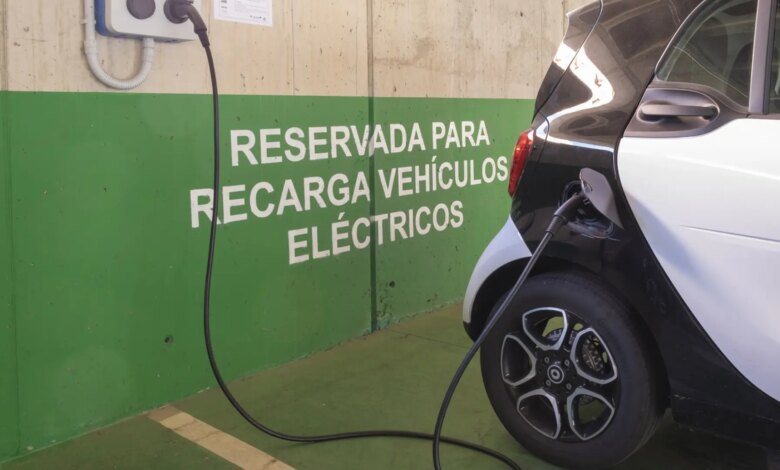
The Faconauto Association, which brings together official dealers of automotive and agricultural brands, has released an updated report on the state of electric vehicle charging infrastructure in Spain. The review is based on July data, allowing an assessment of the current network development and identification of key areas for further growth.
According to the organization, the total number of charging stations in the country has reached 59,439. Of these, 13,072 are not operational, while the number of active public charging points stands at 43,559. This figure has increased by 7.7% over the quarter and by 35.2% compared to July last year. High-speed stations delivering more than 250 kW account for 4,008 units, or 8.6% of the total. Their number has risen by 20.2% over the year.
Despite this positive trend, Faconauto experts point to several challenges. Around 22% of all installed charging units remain out of service, reducing accessibility for electric vehicle owners. Furthermore, the shortage of powerful charging stations complicates long-distance travel across the country. Another issue is the uneven distribution of infrastructure: in some autonomous communities, the number of charging points is minimal. For instance, Catalonia has 9,125 stations, Madrid — 4,973, and Andalusia — 4,676.
Alongside the development of infrastructure, the electric vehicle market is also expanding. In the first six months of 2025, 111,200 new plug-in cars were registered in Spain, including both fully electric and hybrid models. This represents an 83.1% increase compared to the same period last year. The market share of such vehicles reached 15.4%.
Thus, Spain is showing steady growth in electromobility. However, further progress will require addressing technical and regional imbalances in infrastructure.