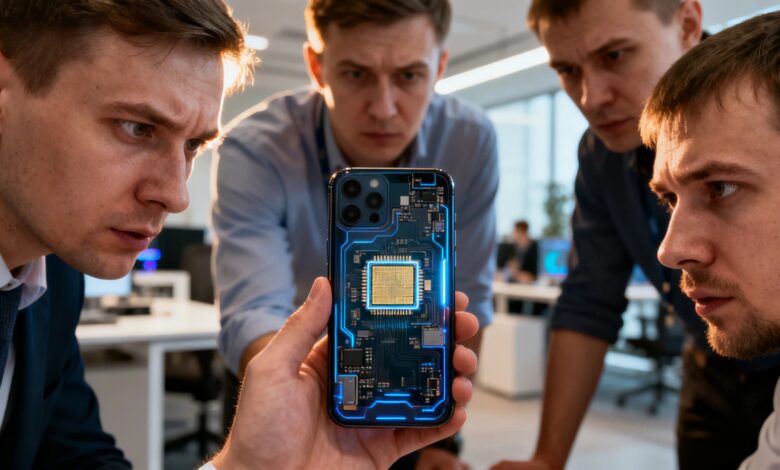
The release of the first tests for the new Tensor G6 processor for the Pixel 11 smartphone has sparked a strong reaction among industry experts and tech enthusiasts. The chip’s unusual configuration and unexpected test results could shift the balance of power in the mobile device market. For users, this means that their familiar expectations of performance and Google smartphone capabilities may be about to change in the coming months.
According to data published by MuyComputer, the device in question bears the codename Google Kodiak. Previously, this name was associated with another model, but the current specifications differ from earlier versions. This time, interest was piqued not just by the new architecture, but also by the processor’s configuration featuring seven cores instead of the usual eight. This move may indicate that Google has decided to rethink the balance between speed, power efficiency, and overall performance stability.
Architecture and testing
Unlike previous generations, which used a standard eight-core layout, the Tensor G6 features a 1+4+2 arrangement. One powerful Arm C1-Ultra runs at 4.11 GHz, four Arm C1-Pro cores are clocked above 3 GHz, and another two C1-Pro cores are limited to 2.65 GHz. This isn’t just a change in frequencies — it introduces an entirely new internal structure, which could give an edge in certain tasks, but for now, raises questions among experts.
The graphics component has also been revamped. Previously, the top models featured the PowerVR DXT-48-1536 GPU, but now we’re looking at the PowerVR C-Series CXTP-48-1536. This change suggests that Google is focusing on new graphics processing capabilities, potentially to enhance AI performance or accelerate gaming and multimedia.
Results and doubts
The most surprising thing is the scores that the Pixel 11 achieved in Geekbench tests: 845 in single-core mode and 2657 in multi-core. For a device expected to launch in 2026 and compete with flagships, these numbers seem modest. Many experts believe this points to an early prototype running test firmware, with some features deliberately limited to check for stability and compatibility.
Such leaks are common in the mobile technology industry, but they rarely reflect the final product. Database listings often feature prototypes intended for internal testing and not for public release. Therefore, it’s too early to draw conclusions about real performance, but the very appearance of this data shows that work on the next generation of Pixel is in full swing.
Possible reasons for the changes
The seven-core architecture may reflect Google’s intention to optimize power consumption and enhance device reliability. In recent years, manufacturers have increasingly experimented with processor configurations to achieve the best balance between speed and battery life. In addition, the new graphics solutions may be aimed at expanding photo and video capabilities, which have always been strengths of Pixel smartphones.
The emergence of test data at this time aligns with the typical schedule for preparing new models. About six months before the official launch, manufacturers usually carry out final checks to ensure the stability of new components. This means that in the coming months we can expect more details and, possibly, even more impressive test results.
What to expect from the Pixel 11
It remains unclear whether the unusual processor configuration will be preserved in the commercial version. Google may make adjustments in the final build if tests indicate the need for improvements. Nevertheless, it is already evident that the company is preparing significant changes for its smartphone lineup, with the new Tensor G6 set to play a key role in this strategy.
For the market, this could mean the emergence of new standards in performance and energy efficiency, while for users it offers the chance to own a device with unique features not previously found among competitors. In any case, interest in the Pixel 11 continues to grow, and every new detail only fuels the anticipation.
Google has been developing its own processors for Pixel smartphones for several years now, aiming to reduce reliance on third-party manufacturers and offer users unique solutions. The Tensor series has become a symbol of this approach, with each new chip marking another step toward greater autonomy and innovation. In 2026, Google is continuing to experiment with architecture and technologies to maintain its position in the market and surprise fans with new capabilities.