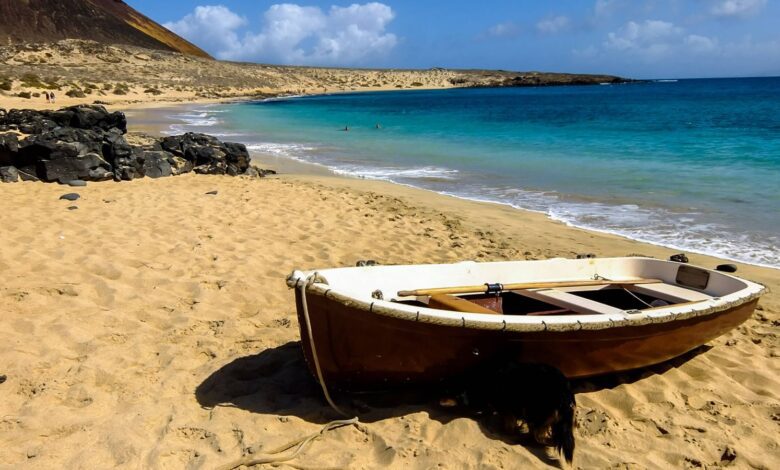
In Spain, there is a unique corner where the familiar sounds and bustle of the city give way to silence, and asphalt is replaced by sand and volcanic trails. On La Graciosa, the most unusual of the Canary Islands, there isn’t a single paved road. About 700 people live here, facing every day what has long become commonplace for most Spaniards: the absence of cars, road signs, and even traffic lights. Instead, there are only sandy paths, white houses with bright shutters, and the endless expanse of the Atlantic.
La Graciosa is not just a geographical rarity. It is part of the largest marine reserve in Europe, where nature sets its own rules. The island is separated from Lanzarote by a narrow strait, which can only be crossed by ferry or, for the bravest, by swimming. Every year, locals recall rescue stories when enthusiasts attempted to brave the turbulent waters of El Río. There is no typical tourist crowd here; instead of mass hotels and noisy bars, you’ll find family-run apartments and quiet seaside restaurants.
Life without roads
On La Graciosa, transportation is something truly special. Instead of cars, there are bicycles and a few off-road taxis that drive along sandy tracks between the island’s two main villages: Caleta de Sebo and Pedro Barba. Roads here are simply directions formed by time and the wind. Tourists most often choose to walk or rent bicycles to reach secluded beaches and volcanic hills.
Las Conchas beach, surrounded by reddish volcanoes, and Montaña Amarilla, where the wind and sea have sculpted whimsical shapes, are just some of the island’s natural wonders. In the southwest lies La Francesa beach, accessible only on foot, crossing dunes and salty plains. Here, silence reigns, broken only by the calls of seabirds and the sound of the surf. In this regard, La Graciosa is reminiscent of other hidden gems of Spain, such as the magical forest in Catalonia with its nativity scene and replicas of Gaudí and Dalí, which we covered in one of our recent features.
A maritime treasure
La Graciosa’s greatest wealth is hidden beneath the waves. The island is part of the Chinijo Archipelago Marine Reserve—over 70,000 hectares of protected waters, Europe’s largest marine sanctuary. Here you’ll find crystal-clear waters, schools of fish, rare algae, and volcanic reefs. Locals still hope for the return of the monk seal, once the symbol of these coasts. The most remote spot—Roque del Este—is closed to regular visitors and serves as a scientific laboratory for marine fauna researchers.
La Graciosa’s underwater world astonishes even seasoned divers. Here, you can encounter not only familiar Atlantic species but also rare seabirds nesting on the cliffs. Thanks to strict fishing and tourism regulations, the island’s ecosystem remains virtually untouched. This is a place where nature truly sets the rules, and people are only guests.
Traditions and daily life
Life on La Graciosa has never been easy. Locals still remember when the island had no electricity or running water. Fishing remains the backbone of the economy, and traditions are passed down from generation to generation. In Caleta de Sebo, the administrative center, you’ll find all the main services, small family-run hotels, and restaurants serving the freshest fish, cuttlefish, seafood rice, and the famous caramelized octopus.
Travelers reach the island by ferry from Órzola (Lanzarote), and the trip takes just 20 minutes. There’s no room for haste here: every sunset feels special, and time moves differently. The island has preserved its authenticity despite increasing interest from tourists. Locals are proud to have maintained their way of life and resisted the lure of mass tourism.
Secrets of La Graciosa
La Graciosa is more than just a vacation spot—it’s a true challenge for those seeking peace and harmony with nature. There are no conventional amusements here, but you have the chance to feel part of a unique world, where every day is filled with simple pleasures. The island seems made for those tired of city life who want to experience what it’s like to live without asphalt or the noise of engines.
In recent years, La Graciosa has become a symbol of sustainable tourism and environmental stewardship. Local authorities strictly control construction and the number of visitors to preserve the island’s unique landscape and ecosystem. La Graciosa continues to amaze even seasoned travelers—everyone here can find something for themselves, whether it’s a secluded beach, an unusual sunset, or a conversation with local fishermen who know all the secrets of the Atlantic.
La Graciosa is the eighth inhabited island of the Canary archipelago, located north of Lanzarote. Covering an area of about 29 square kilometers, it has a permanent population of no more than 700 people. The island is known for its sandy roads, lack of asphalt, and unique marine ecosystem. La Graciosa is part of the Chinijo Archipelago Marine Reserve, the largest protected marine area in Europe. Thanks to strict environmental regulations, the island has preserved its pristine appearance and stands as an example of harmonious coexistence between humans and nature.