In the northwest of the Iberian Peninsula, where the land meets the tumultuous Atlantic, there is a stretch of coastline that captivates the imagination. In the comarca of A Mariña Lucense, the coastal cliffs display incredible plasticity, as if some unknown giant had folded layers of granite into whimsical shapes. Here, the power of the ocean and the passage of time have shaped a landscape like no other. Towering up to forty meters high, stone walls are deeply creased, creating the illusion of gigantic sheets crumpled and set on edge against the relentless surf. This natural corner combines geological heritage, echoes of an industrial past, and breathtaking panoramic views.
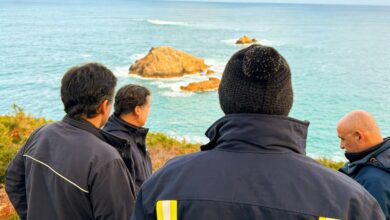
The epicenter of this natural spectacle is located along the coastal strip of the Xove municipality, in the area near Punta Morás. Here, travelers are greeted by the famous cliffs, whose twists and granite layers form dramatic, whimsical landscapes. The area holds high conservation status, as part of the ZEC (“Special Area of Conservation ‘Costa Occidental de A Mariña’”), ZEPA (“Special Protection Area for Birds”), and LIC (“Site of Community Importance”). The natural viewing point offers breathtaking vistas: to the east, you can see the Farallóns islets, while to the west lie the Ansarón islet and the rocky ridge of As Salseiras. Covering about ten hectares and rising to nearly eighty meters, Ansarón is home to colonies of seabirds, especially the yellow-legged gull and the European shag.
The best way to begin a journey to these geological formations is from the small port of O-Portiño de Morás. Here, you can still see the ramp of the old whaling factory, which operated until 1977, serving as a reminder of the region’s rugged past. A coastal trail starts from the gravel parking area, leading straight to the cliffs. The route can be extended by following the Senda Costeira de Xove trail to Praia de Portocelo beach, then returning via the inland road. At the very beginning, your attention will be drawn to huge concrete structures—dolosse. These blocks, weighing between 30 and 50 tons, were produced here for the construction of the port in San Cibrao. Many were deemed defective and left scattered around the area, eventually becoming an integral part of the industrial-natural landscape.
The route itself is short and easy, offering an opportunity to closely observe the terrain and spot unique details. On the granite outcrops, you can see light-colored veins, hollows shaped over thousands of years by salty winds, and deep cracks that testify to the destructive power of the waves. Once at the top, on an improvised viewing platform, you get a full sense of the landscape’s scale. This is where you have the iconic view of the stone folds that gave the site its unofficial name. Given the proximity to the ocean and the exposed location, it’s advisable to wear shoes with good grip and be cautious, avoiding the edge of the cliffs. Respecting signs and rules on this protected site is key to preserving one of the greatest coastal landscapes in northwest Spain—a place whose beauty and uniqueness rival the region’s best-known landmarks.