How did it all begin?
History Lotería de Navidad began in 1812. It is one of the oldest lotteries in the world, held with barely any changes for more than two centuries. The lottery draw was never interrupted, not even during the Spanish Civil War, although it was temporarily moved to Valencia due to the evacuation of the republicans from the capital. After the war, the lottery continued under the Franco regime. Originally, the draw was conceived as a way to replenish the state treasury, but over time it became a symbol of Christmas. What makes the Spanish lottery unique is the sheer number of prizes. Unlike other lotteries where only a handful win, Lotería de Navidad delights thousands of people. Its wide appeal has made it a favorite among Spaniards.
Who is ‘El Gordo’ and why is the lottery named after him?
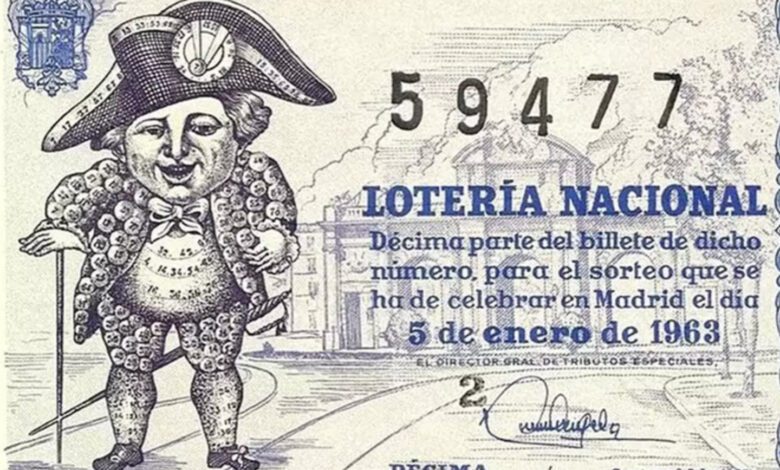
The origin of “El Gordo” goes back to the late 18th century, when a charming character was created to promote the draw. This mythical figure, small and ‘fat’, was also known as the ‘Lottery Fanatic’ and became a symbol of the popular game. His body left little to the imagination: round in shape and completely covered with balls and lottery elements. He was accompanied by a legend with the words: “De alegría y de dinero, este enano afortunado, si lo estudias con esmero te enseñará alborozado de la fortuna el sendero”, which translates as “This lucky gnome, brimming with joy and wealth, if you study him closely, will happily show you the path to fortune.” The character’s friendly appearance made him an excellent advertisement for selling lottery tickets. He grew so popular that in 1851, a specialized lottery magazine was launched, called “El Enano” (“The Dwarf”). Over time, this unusual character gradually lost his fame and faded from public imagination. New advertising campaigns—especially with the rise of television—introduced other symbols to promote the Christmas Lottery. The dwarf’s identity eventually shrank to just one name: “El Gordo.” Today, everyone recognizes the name, but almost no one remembers the original character.
Curious facts about the Christmas Lottery
The “El Gordo” number has been repeated twice in history: the number 20.297 was the winning number in both 2006 and 1903, and number 15.560 won in 1956 and 1978, making them the only instances of such repetition in lottery history. Prizes ending with identical digits are extremely rare: only four times has the main prize gone to numbers like 25.444, 25.888, 35.999, and 55.666, making these truly exceptional cases in the lottery’s history. The myth of ball weight: some believe that numbers with large identical digits, such as 78.888, are heavier because supposedly there’s more ink on them, which could affect their position in the drum. However, this is untrue. The numbers are applied with a laser, so there’s no ink on the balls, ensuring they all weigh exactly the same. Numbers that have never won: so far, the first prize has never ended with the following numbers: 09, 10, 13, 21, 25, 31, 34, 41, 42, 43, 51, 54, 59, 67, 78, and 82. This fact may be useful for those who rely on statistics when choosing their numbers. Madrid is the luckiest city in the El Gordo draw: the capital has won the top prize more than 80 times. Other cities, such as Barcelona and Sevilla, have also frequently claimed this prize. The first Christmas Lottery draw took place in 1812 in Cádiz. This draw was held during the War of Independence and was intended to raise funds for the state. At that time, a ticket cost 40 reales, and the top prize was 8,000 pesetas. The least lucky provinces: although the top prize has been won almost everywhere in Spain, some provinces, such as Ávila, Tarragona, Ceuta, and Melilla, have been less fortunate, claiming the prize only a few times or never at all.
Participation rules
To participate in the lottery, you need to purchase a ticket from one of the many lottery kiosks spread throughout Spain. Famous stalls like Doña Manolita in Madrid or La Bruja de Oro in Barcelona attract special attention, as these are considered “lucky” places with a long history of big wins. Tickets are sold not only at specialized kiosks, but also online. One full ticket costs €200. However, because of the high cost, many buyers prefer to buy shares of a ticket. Each ticket is divided into 10 parts, or “décimos”, and you can purchase any décimo for €20. If you win, the holder of a décimo receives 10% of the prize sum. This is why people in Spain often team up to buy tickets together and split any winnings. The total prize fund amounts to €2.5 billion, while the main prize, “El Gordo,” reaches €400,000 for each winning ticket (one décimo brings €40,000). Unlike traditional bingo-style lotteries, “El Gordo” is drawn by 5-digit ticket numbers. Each number can be printed several times in different series, so a single prize may have several winners.
Drawing Traditions
An integral part of the Lotería de Navidad is the children from the San Ildefonso school, who sing out the winning ticket numbers. Their voices blend into a melody, creating a magical atmosphere. Even if your ticket doesn’t make you a millionaire, the odds of winning remain high. Spaniards like to joke: “If you don’t win El Gordo, at least you’ll have enough for a glass of wine!”
Taxes on winnings
Part of the winnings are subject to tax. Until 2020, no taxes were levied on amounts up to €20,000, but later the threshold was raised to €40,000. Anything above this amount is taxed at 20%. Nevertheless, Spaniards generally accept taxes on lottery winnings, as a portion of these funds returns to the national budget and supports public needs. Lotería de Navidad — it’s not just about numbers and money. It’s a celebration of unity, joy, and belief in miracles that can happen to anyone. Whether your ticket wins or not, this event has long been a symbol of Christmas warmth and hope.