The introduction of additional tariffs on electric vehicles from China at the end of 2024 has become a real challenge for the Spanish market. European authorities decided to restrict the flow of cheap cars to protect local manufacturers and prevent Chinese companies from taking leading positions. As a result, prices for popular models have risen, and buyers now face a new choice: pay more or look for alternatives.
According to Autobild, four major Chinese automotive groups have come under scrutiny. Grupo SAIC has been hit the hardest, facing the highest tariff—38.1%. The reason is their refusal to cooperate with the European Commission during the subsidy investigation. Owning brands such as MG and Maxus, SAIC is now forced to sell models like the MG4, MG Cyberster, MGS6, MGS5, as well as commercial vehicles like the Maxus eDELIVER 3, eDELIVER 5, eDELIVER 9, T90 EV, and eDELIVER 75 with the highest tax burden. This has immediately impacted prices—even despite low production costs in China.
Chinese brands in Europe
In recent years, Chinese manufacturers have actively entered the European market by leveraging cheap labor and government subsidies. Their electric vehicles offered an answer for buyers who couldn’t afford expensive European counterparts. While European and Japanese companies invested billions in developing new technologies, Chinese firms offered cars priced like standard gasoline models. This sparked dissatisfaction among local players, leading them to push for new tariffs.
Currently, according to a russpain source, the standard import tariff for cars from China is 10%, but special duties have been added for electric vehicles. Some companies have tried to compensate for these costs at the expense of their own profits, in order not to lose customers. However, even these measures do not always prevent a decline in demand, as the price difference has become noticeable.
Who suffered the most
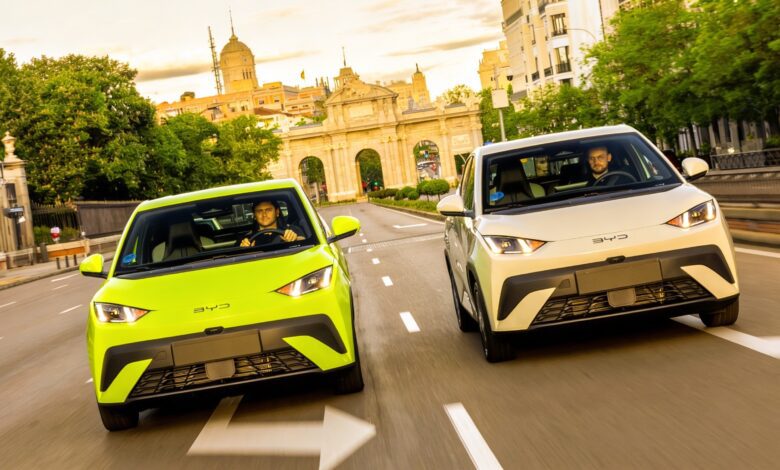
Besides SAIC, Grupo Geely also came under fire, receiving a 20% tariff. Its portfolio includes Polestar, Volvo, Lynk&Co, Zeekr, and Smart. For example, the Volvo EX30, now assembled in Belgium, was previously subject to these restrictions. Smart and Lynk&Co 02 models have also become more expensive. BYD received a 17.4% tariff, affecting almost the brand’s entire line of electric vehicles. Leapmotor, another Chinese player, was also hit with a 20% tariff, and now the company plans to manufacture its cars at a plant in Zaragoza to avoid additional duties.
Interestingly, despite the new taxes, Chinese manufacturers do not always pass them on to buyers. Many brands have chosen to temporarily operate with lower profits to maintain their market share. But if the situation does not change, experts expect further price increases and a decline in the attractiveness of Chinese electric cars for Spaniards.
Causes and consequences
The European Commission explains its actions by noting that Chinese car manufacturers receive substantial government subsidies, allowing them to undercut prices in the European market. The investigation revealed that those who cooperated with the Commission received more favorable conditions, while those who refused faced the highest tariffs. This has sent a message to other manufacturers: transparency and openness can reduce tax burdens.
While European companies continue to invest in electric vehicle development, Chinese brands are exploring new ways to bypass restrictions. For instance, Leapmotor has already announced plans to localize production in Spain. This move will help them avoid tariffs and maintain competitive prices. Meanwhile, buyers must closely monitor changes in the market and decide between familiar brands and new alternatives.
As car ownership becomes increasingly expensive, many Spaniards are looking for ways to save. Recently, analysts explained why buying a car with cash helps avoid unnecessary expenses — especially as prices rise due to tariffs and taxes.
Grupo SAIC is one of China’s largest automakers and has been actively expanding exports to Europe. The company owns the MG and Maxus brands, which have gained popularity in Spain in recent years thanks to competitive pricing and a wide range of electric vehicles. Following the introduction of new tariffs, SAIC has found itself in a challenging position: to maintain its market share, the group is being forced to seek new solutions, including possible production localization and a review of its pricing strategy. This reflects a broader trend—Chinese brands are increasingly facing tough measures from the European Union, changing the rules of the game for all market players.