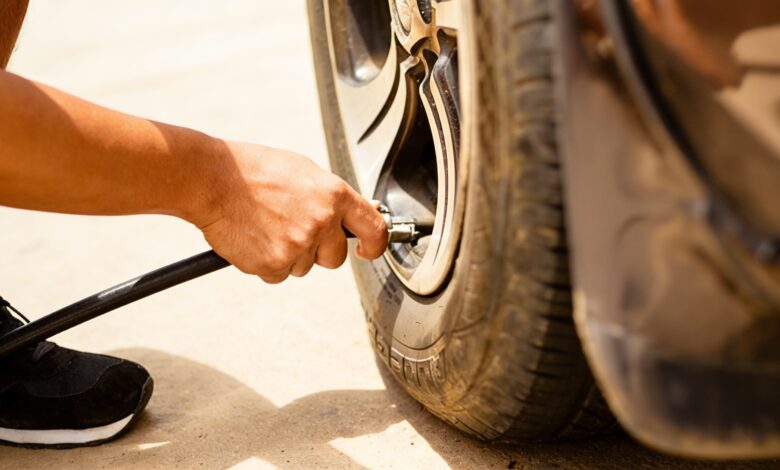
Tire pressure is more than just a number on a gauge—it’s a key factor that directly affects safety, fuel consumption, and the lifespan of your tires. Ignoring this parameter can lead to unexpected expenses and risks, which are easily avoided by knowing a few important details.
Most drivers rely on a visual check of their tires and forget that tire pressure determines how well a car grips the road and responds to braking. Even a small deviation from the recommended pressure can increase fuel consumption, worsen handling, and accelerate tread wear. According to russpain.com, regularly checking your tire pressure can save up to 3% on fuel annually and reduce the risk of accidents.
Car manufacturers provide recommended tire pressures for each model, and these values can vary even within the same lineup. The range is usually from 2 to 2.5 bar, but you’ll always find the exact figures on a special sticker—most often located on the inside of the driver’s door or the fuel cap. Modern cars come equipped with a Tire Pressure Monitoring System (TPMS), which has been mandatory in new vehicles across Europe since 2014. This system of sensors immediately alerts you to drops in pressure, helping you avoid unpleasant surprises on the road.
The impact of temperature
Few people realize that tire pressure depends on air temperature. For every 5°C drop in temperature, pressure drops by about 1 PSI. That’s why in winter, especially in the morning, the low pressure warning often appears on the dashboard—not always because of a puncture, but simply because the air inside the tire contracts in the cold. In summer, on the other hand, tire pressure can temporarily rise after long drives on the highway due to heat.
It’s recommended to check tire pressure only when the tires are cold—after the car has been parked for at least three hours or driven less than two kilometers at low speed. After a long drive, the readings will be higher and shouldn’t be adjusted at that time.
Benefits of nitrogen
Some service centers offer to inflate tires with nitrogen instead of regular air. Nitrogen molecules are larger than oxygen, so the gas escapes from the tire more slowly, and the pressure remains stable for longer. Nitrogen also doesn’t contain moisture, preventing corrosion of the wheel’s inner surface. This approach is especially popular in motorsports, but it can also be useful for everyday drivers if the car is used in conditions of sharp temperature changes or long trips.
Tires inflated with nitrogen are usually marked with green valve caps. However, for city driving the difference between air and nitrogen is not always noticeable, so the choice is up to the car owner.
TPMS monitoring systems
The TPMS (Tyre Pressure Monitoring System) comes in two types: direct and indirect. The direct system uses sensors inside the wheel to measure pressure and temperature in real time. The indirect system analyzes wheel rotation speed using ABS sensors—if one wheel starts rotating faster, the system concludes there’s a drop in pressure. Both options effectively warn about problems but require periodic maintenance: the sensors can fail or their batteries may deplete.
Drivers should remember that TPMS is not a substitute for manually checking tire pressure. The system may miss a slow leak or trigger a false alarm during a sudden temperature change.
Inflation mistakes
Insufficient pressure is a common cause of increased fuel consumption and uneven tire wear. If the pressure drops 20% below normal, fuel consumption rises by about 3%, and the tire shoulders wear out faster. This might go unnoticed for months, but over a year it leads to significant losses. Overinflated tires are also dangerous: contact area with the road decreases, grip worsens, and the center of the tread wears out more quickly. In addition, the suspension becomes more rigid, reducing comfort and increasing stress on chassis components.
Experts recommend checking tire pressure at least once a month, and always before long trips. This is especially important during season changes, when temperature swings are most significant.
Many drivers believe that ‘more is better than less’ when it comes to tire pressure, but this is a misconception. The optimal pressure is what the manufacturer specifies, taking into account the vehicle’s load and operating conditions.
The TPMS (Tyre Pressure Monitoring System) has been standard in new cars across Europe since 2014. It allows real-time monitoring of the pressure in each tire and alerts the driver to any deviations. The direct system uses sensors inside the tires, while the indirect one analyzes the rotation speed of the wheels. TPMS has greatly improved road safety, but regular manual pressure checks are still necessary. It’s important to remember that sensors require maintenance and may give false alerts during sharp temperature changes or after wheel replacement.