The transmission plays a key role in any vehicle, delivering power from the engine to the wheels. This mechanism enables the car to move at different speeds and handle various road conditions safely for passengers.
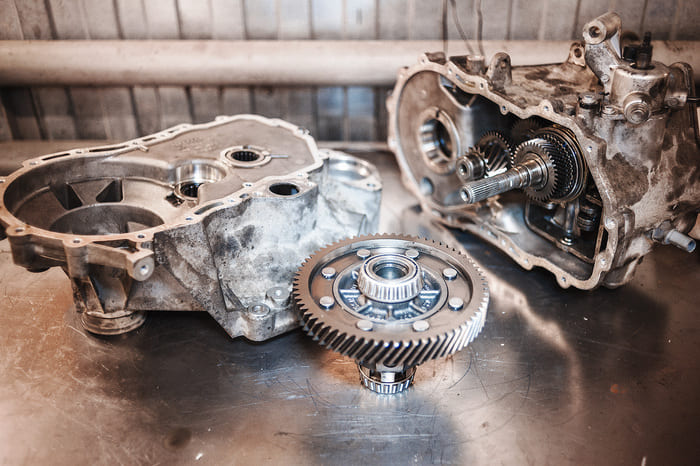
The gearbox, or transmission, is a complex unit made up of numerous gears and mechanisms. It is located between the engine and the drive wheels, and can be manual, automatic, or semi-automatic. The main function of this component is to optimally distribute engine power, allowing the vehicle to start, accelerate, climb and descend slopes, and reverse. Additionally, the transmission allows the engine to be disconnected from the wheels, for example, when stopping on an incline.
The cost of replacing a gearbox in Spain depends on a range of factors. For manual options, the price ranges from €450 to €1,700, whether for new or used parts. For premium vehicles, the amount can reach €3,500–4,000. Automatic transmissions are more expensive: basic models cost from €1,000 to €3,000, while expenses for luxury cars can rise to €6,000–7,000.
The final amount is influenced by the type and condition of the gearbox, the make and model of the vehicle, as well as the labor costs of specialists. It is important to consider whether the part being installed is new, refurbished, or used, the presence of original components, and the complexity of access to the unit.
The time required for replacement also varies. For manual transmissions, it typically takes from 4 to 8 hours, while for automatic ones, it ranges from 6 to 12 hours. The duration depends on the car’s design features, the technician’s experience, and whether additional diagnostics and final checks are needed. Sometimes, programming of electronic components is required, which may take up to two hours. On average, the car is returned to the owner one or two days after the start of repairs.
There are differences in the replacement process between manual and automatic transmissions. Manual gearboxes are simpler in construction and do not require electronic adjustments, whereas automatic systems include hydraulic and electronic components, making the process more complex and expensive. Replacing an automatic transmission often involves additional software configuration and teaching the system new parameters.
In the event of a manual gearbox malfunction, the problem is usually apparent, while diagnosing an automatic transmission often requires special electronic tests. This also affects the overall cost and timeframe of repairs.