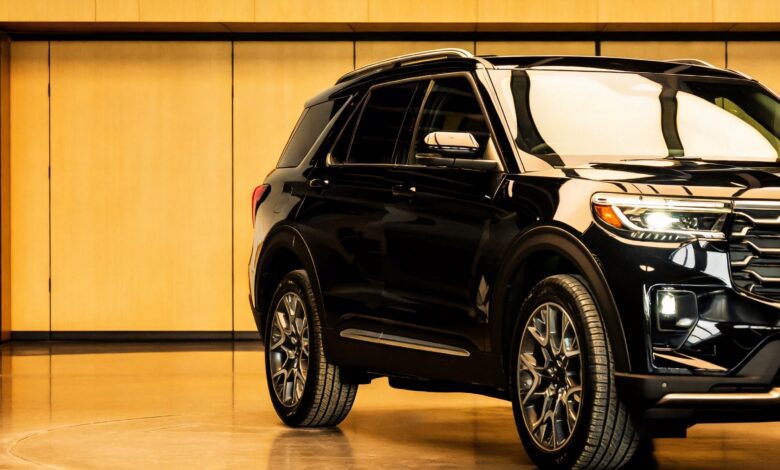
The launch of a new car for Pope Leo XIV has sparked discussion not only among the faithful but also in the automotive industry. The hybrid 2026 Ford Explorer Platinum, built specifically for the head of the Catholic Church, is more than just a means of transportation—it has become a true symbol of combining tradition with modern technology. This move by Ford highlights how the company values not only innovation but also respect for historical and cultural roots.
The SUV was assembled at Ford’s plant in Chicago, a city of special significance since Pope Leo XIV spent his childhood there. The manufacturer chose to focus on details reflecting the pontiff’s personal history. The vehicle’s interior features elements inspired by both Chicago and the Vatican—from embroidered city skylines to the image of St. Peter’s Basilica on the door sills. This approach not only distinguishes the car from others but also turns it into a unique object filled with meaning.
Interior details
The Ford Explorer’s cabin for the Pope is finished in brown tones, giving it a sense of solidity and comfort. The front seats feature patches with the flowers and symbols of Chicago’s flag—blue and white stripes, red stars. The center armrest is embroidered with a city panorama, while silhouettes of Chicago and St. Peter’s Basilica appear on the door sills. This design highlights the connection between two places important to the Pope, making the car not just a vehicle but part of his personal story.
Special attention was paid to confidentiality: factory employees did not know who this unit was intended for, although they were told the order was for a very important person. It was only after the work was completed that it became known the car would be sent to the Vatican. According to a Ford engineer, working on this project became a source of real pride and family discussions for many at the factory.
Vehicle handover
The official handover of the SUV took place at the Vatican on February 28. Ford CEO Jim Farley personally traveled to Italy with his wife to present the keys to Pope Leon XIV. The pontiff examined every detail with care, appreciated the custom approach, and even took a short drive himself. According to the head of Ford, the Pope showed interest in the car’s performance and highlighted its sporty character.
During the meeting, they talked not only about technology but also shared memories of Chicago. Jim Farley brought photos of the factory team and letters from employees who worked on the project. In response, Pope Leon XIV blessed several rosaries, which were later given to the workers. This exchange of gifts became a symbol of mutual respect and gratitude.
Technical features
The Ford Explorer Platinum, built for the Pope, is equipped with a hybrid powertrain featuring a 3.3-liter V6 engine and a ten-speed automatic transmission. It delivers up to 300 horsepower, with a maximum towing capacity of 2,200 kilograms. The interior offers seven seats arranged in three rows, making the vehicle versatile for various needs within the Vatican.
In the United States, this model starts at $50,965, which is approximately 44,000 euros at the current exchange rate. This version is not sold in Europe, where only the all-electric Explorer based on the Volkswagen ID.4 is available. Although the electric model is less expensive, it does not offer the same unique features. As noted by russpain.com, the hybrid variant remains exclusive to the American market and now—also to the Vatican.
Pope Leo XIV is the first head of the Catholic Church from the United States and a member of the Order of Saint Augustine. He grew up in Chicago, not far from the Ford plant, a key factor in his choice of vehicle. The new Explorer not only highlights the connection between America and the Vatican but also reflects current trends in the automotive industry, where sustainability and personalization are a priority. Ford continues its tradition of creating unique vehicles for pontiffs, further reinforcing its reputation as a manufacturer able to combine innovation with respect for history and individuality.