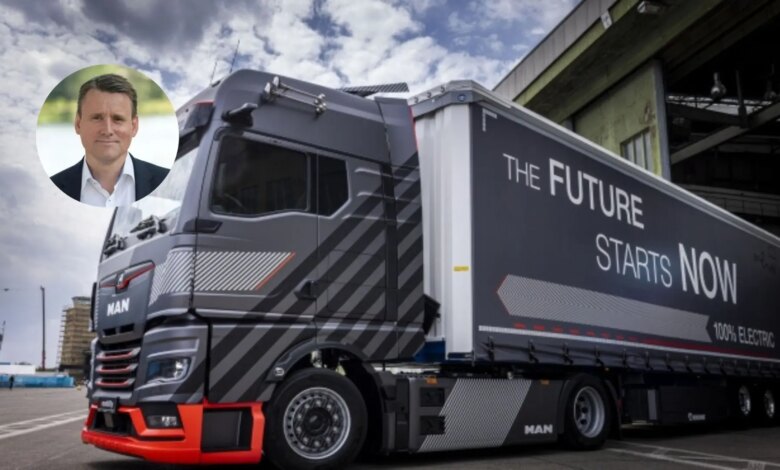
The shift to electric trucks has the potential to transform the freight market in Europe, but everything depends on infrastructure. Even the most advanced models cannot reach their full potential if drivers don’t have access to fast charging along major routes. MAN Truck & Bus has already started mass production of electric trucks, and demand is growing, but without support from the government and businesses, progress will be slow.
MAN Truck & Bus, known for its diesel vehicles, is now betting on electrification. Starting in 2025, the brand’s factories will produce the new eTGX and eTGS models, which have already received more than 700 orders. These trucks are designed for long-haul routes and can carry up to 44 tons, with battery capacity reaching 560 kWh. The manufacturer claims that with a modern charging network, investments in this type of transport pay off in just two and a half years—faster than even industry optimists expected.
Charging: the key to success
The main challenge is not the trucks themselves, but the lack of a developed charging station network. According to Autobild, MAN recently held a public demonstration of fast charging in Sweden: the power reached 750 kW and the truck’s battery charged from 10% to 90% in just half an hour. This was made possible thanks to the MCS (Megawatt Charging System), which will be available on new models as early as the second quarter of 2026. However, such stations are still rare even for passenger electric cars, let alone heavy-duty vehicles.
Drivers and transport companies remain skeptical about switching to electric vehicles, as the lack of guaranteed charging stations along the route increases risks. MAN is urging manufacturers, network operators, and authorities to speed up the construction of high-capacity charging points, making electric transport a real alternative to diesel. According to the company’s estimates, thousands of logistics centers and refueling stations need to be equipped with chargers up to 3 megawatts to ensure full operations.
Economics and prospects
The economic benefit of electric trucks becomes clear when the right infrastructure is in place. The eTGX and eTGS models are capable of transporting large loads over long distances, and their maintenance and fuel costs are significantly lower compared to diesel counterparts. According to Alexander Vlaskamp, CEO of MAN Truck & Bus, the main obstacle is not the technology but the lack of charging stations. If this issue is resolved, electric trucks could become the industry standard as early as 2035.
Europe already has examples where a mass switch to electric vehicles is transforming the market. For instance, new car sales in China broke all records in 2025, with electric cars taking the lead. You can learn more about this in the article on how a Chinese electric crossover changed the rules of the game. European manufacturers are keeping a close eye on these trends and striving to keep up.
The future of freight transport
MAN Truck & Bus is focusing on the development of charging infrastructure together with other market players. The company is actively engaged in negotiations with network operators and government bodies to accelerate the construction of new stations. In the coming years, powerful chargers are expected to appear on key highways and at major logistics centers, enabling transport companies to plan their routes without fear of running out of energy.
The shift to electric traction is not just a fashionable trend, but an economic necessity for European hauliers. Reduced fuel and maintenance costs, along with stricter environmental regulations, make electric trucks increasingly attractive. However, without infrastructure-level support, a large-scale transition is impossible—this now becomes the industry’s top priority.
Alexander Vlaskamp, head of MAN Truck & Bus, is one of the main advocates for switching to electric traction in freight transport. Under his leadership, the company is actively implementing new technologies and investing in charging infrastructure. Vlaskamp is convinced that with the right approach, electric trucks can fully replace diesel counterparts in the coming years, and Europe will become a leader in this field.