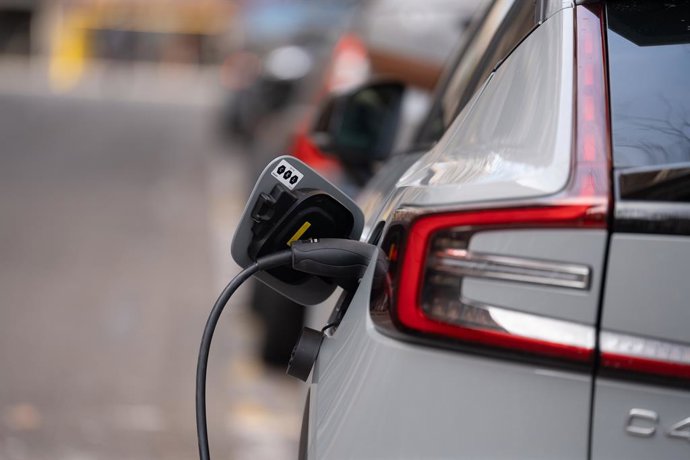
As of July 2025, Spain had 43,559 public electric vehicle charging stations registered, representing a 35.2% increase compared to the same period last year. Compared to the first quarter of 2025, this marks a 7.7% growth. These figures come from Faconauto, based on the REVE charging point map, which displays all available charging stations in the country.
Experts note that the current infrastructure already provides a real opportunity for a transition to electric vehicles. By the end of 2024, there were 459,225 electric vehicles in operation in Spain, averaging about 10.5 cars per working charging station.
However, around 13,000 stations, or 22% of the total, have been installed but are not yet operational. Faconauto forecasts that the number of available charging stations could approach 60,000 by the end of the year.
Of the total number of charging units, 4,008 are ultra-fast stations with a capacity over 150 kW, making up 8.6% of the entire network. However, experts believe that to improve convenience for users and enable more long-distance travel, especially during holiday periods, the number of these high-power charging points needs to be increased.
The distribution of charging infrastructure across Spanish regions remains uneven. Nearly half of all stations are concentrated in three communities: Catalunya (9,125 points), Madrid (4,973), and Andalucía (4,676). This highlights the differing pace of electric mobility development across the country.
Faconauto calls on authorities to simplify the procedures for launching new charging stations and to introduce more effective measures to support fleet electrification. Compared to neighboring countries such as Portugal, France, and Germany, Spain still lags behind in this area.
Nevertheless, sales of electric and plug-in hybrid vehicles in Spain continue to grow. By July 2025, 123,315 such vehicles had been sold, already surpassing the figures for the entire year of 2024.
Overall, infrastructure is developing, but additional steps are needed to remove administrative barriers and stimulate investment in charging networks to accelerate the transition to electric vehicles.