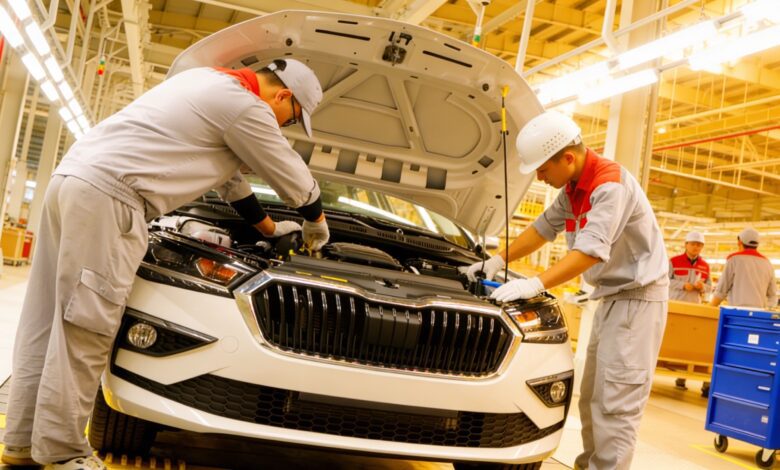
A sharp decline in sales and aggressive competition from Chinese automakers have forced Skoda to wind down its business in China. Over the past seven years, demand for the brand’s vehicles in the country has dropped almost to zero, marking one of the most significant setbacks among European brands. Now, the company is completely changing its strategy, focusing on other markets where growth potential still exists.
Skoda has officially announced plans to end sales in China by mid-2026. Until then, the brand’s vehicles will remain available through a local partner, with service and maintenance retained according to existing standards. This move is explained not only by declining interest in traditional models but also by the rapid shift of the Chinese market towards electric vehicles, where local manufacturers already hold leading positions.
In recent years, Skoda has faced a steady decline in demand. While the company sold 341,000 cars in China in 2018, by 2025 that figure had dropped to 15,000—a decrease of nearly 96% over seven years. The reasons lie in the rapid growth of local brands, which quickly adapt to new technologies and offer more affordable options for buyers. According to russpain.com, foreign companies were unprepared for such a swift transformation of the market.
Losing ground
China was a key market for Skoda for many years. The company entered the country in 2005, launching a joint venture with SAIC. Just two years later, the first Skoda Octavia rolled off the assembly line, and sales surged to record levels. However, after 2018, the situation changed dramatically. Local manufacturers began rapidly developing electric vehicles, and government support accelerated this process. As a result, foreign brands, including Skoda, started losing market share year after year.
Skoda’s management has repeatedly noted that competition in China has become too intense. The first rumors about a possible withdrawal from the country surfaced as early as 2022. At that time, CEO Klaus Zellmer openly spoke about the challenges posed by shifting consumer preferences and the growing strength of local brands. Despite efforts to adapt, Skoda was unable to turn the situation around.
Shifting priorities
While Skoda was losing ground in China, the company was actively expanding its presence in other regions. In 2025, the brand entered the top three in sales in Europe for the first time. Growth has been particularly strong in India, where demand for Skoda vehicles reached a historic high. The company also strengthened its position in Turkey and North African countries, partially offsetting losses in the Asian market.
In the coming years, Skoda plans to focus on developing its presence in India and Southeast Asian countries. This strategic choice is driven by steady demand and less competition from local manufacturers. In addition, the company is preparing to launch new electric vehicles to keep up with global trends and avoid repeating mistakes made in China.
New models and future prospects
Despite leaving its largest market, Skoda closed 2025 with a 12.7% increase in global sales. The company sold over a million vehicles, its best performance in the past six years. In the near future, Skoda will unveil a new electric vehicle, the Skoda Epiq, and by the end of the year, the seven-seat Peaq is expected to premiere. These models are designed to strengthen the brand’s position in both European and Asian markets.
Skoda continues to invest in developing new technologies and expanding its lineup. The company is betting on electrification and adapting to the needs of different regions. This approach helps maintain competitiveness even in a rapidly changing market.
Skoda is a Czech automotive brand that is part of the Volkswagen Group. Founded in 1895, the company has grown from a small manufacturer into one of the leading players on the global market. In recent years, Skoda has actively expanded its line of electric vehicles and increased its presence in countries with growing demand for modern cars. The brand is known for its reliability, affordability, and ongoing adoption of new technologies.