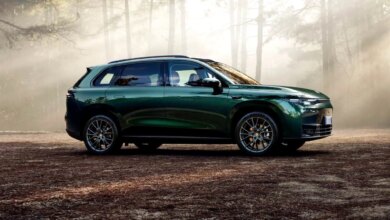
In July 2025, the second generation C5 Aircross will be launched on the Spanish market. This midsize crossover now features larger dimensions, an expanded suite of electronic systems, and a broad range of powertrains, including both hybrid and fully electric versions. The new model aims to strengthen its position among competitors such as Renault Austral and Peugeot 5008.
The body length has increased to 4.65 meters, the width is 1.87 meters, and the height is 1.66 meters. The wheelbase has grown to 2.78 meters, which should enhance comfort for second-row passengers. At the same time, the trunk volume has slightly decreased and now stands at 565 liters, regardless of the powertrain type.
The car is built on the STLA Medium platform, used by the Stellantis Group. This has allowed for the integration of modern solutions and the unification of components with other models in the group. The engine lineup includes both conventional hybrids and fully electric versions.
The base Hybrid 145 version is equipped with a 136-horsepower three-cylinder petrol engine and a 12-horsepower electric motor integrated into the six-speed automatic transmission. The combined output is 145 hp, and a small 0.9 kWh battery provides short-term electric-only driving.
The plug-in hybrid is equipped with a 150 hp gasoline engine, a 125 hp electric motor, and a 21 kWh battery. The combined output reaches 195 hp, with an electric driving range of up to 96 km. Charging with the standard device takes just over five hours, while the optional charger reduces this to less than three hours.
For the first time in the model’s history, fully electric versions are available. The 213 hp variant is fitted with a 73 kWh battery and can cover up to 520 km on a single charge. A more powerful 231 hp modification with a 97 kWh battery and a range of up to 680 km is expected soon. Both versions support fast DC charging up to 160 kW and AC charging up to 11 kW, with an optional upgrade to 22 kW featuring V2L functionality.
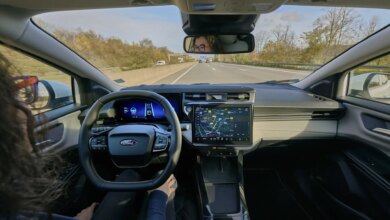
The interior has been completely redesigned. A 10-inch customizable digital instrument panel is now positioned in front of the driver, while the multimedia system features a vertical 13-inch screen with wireless smartphone integration and over-the-air updates. A voice control system has been implemented, allowing users to activate various functions using natural commands.
Second-row passengers now have more legroom—according to the manufacturer, an increase of 51 mm. However, instead of three separate seats, a single bench is now installed, reducing the cabin’s transformation flexibility. The backrests are adjustable between 21 and 33 degrees. The luggage compartment retains practical storage compartments.
During initial road tests in Mallorca, the car demonstrated a high level of comfort. The soft suspension with hydraulic bump stops effectively smooths out road irregularities, while the steering focuses on smoothness rather than sporty precision. Both front and rear seats offer ample space; however, the interior has become less versatile due to changes in the rear seating design. The quality of interior finishes is also slightly below that of the previous version.
On the highway, the crossover handles steadily and calmly. With a ground clearance of 200 mm, it easily overcomes urban obstacles. Even with 20-inch wheels, the level of comfort remains high, making this model suitable for family trips and long-distance travel.
The equipment list includes modern driver assistance systems: semi-automatic lane changing, blind spot monitoring, adaptive cruise control, fatigue monitoring, as well as matrix LED headlights, a panoramic roof, a head-up display, and a hands-free electric tailgate.
The base Hybrid 145 version starts at €27,690, while the top electric modification Max is priced at €43,590. Various trims and powertrain options are available in between, allowing buyers to choose a car to suit their individual needs.