The European car market is undergoing significant changes: Chinese electric vehicle manufacturers are rapidly expanding their share, offering attractive prices and modern technology. This is causing concern among European brands, which are facing new challenges and the need to adapt to evolving conditions. At the center of attention is Volkswagen’s stance, as the largest player in the market, demanding that the same rules apply to all participants.
Level playing field
Volkswagen Turismos head Thomas Schäfer has openly stated that European and Chinese companies should operate under the same standards. In his view, if European brands invest in local production, create jobs, and develop infrastructure, Chinese companies should do the same, rather than just importing finished cars. Schäfer believes this approach will maintain balance and prevent the market from descending into a price war where only those who can undercut thanks to cheap labor or subsidies win.
Schäfer recalled that in the past, the European market had already experienced a surge of Japanese and Korean cars, but at that time Asian manufacturers also invested in localization. Now a similar situation is unfolding, but with Chinese companies actively seeking new markets due to intense competition at home. Europe remains attractive because of high profit margins, which is why Volkswagen insists on fair rules for all.
Impact of new rules
Over the past two years, the European Union has imposed additional tariffs on imports of Chinese cars to protect local manufacturers. However, Schäfer believes that taxes and restrictions do not always have a positive effect: the automotive industry is global, and free trade benefits all participants. He notes that constant changes in European regulations make it difficult for companies to operate, forcing them to spend resources on compliance with new requirements instead of advancing technology and production.
According to Schäfer, Europe needs to develop its own strategy to support industry, as China and the USA do. Only this approach can help maintain competitiveness and prevent losing ground in the global market. He emphasizes that excessive bureaucracy and constant regulatory changes hinder companies from investing in the future, and paperwork has become a serious barrier to growth.
Electrification and brand strategy
In recent years, Volkswagen has been actively shifting its strategy, returning to its roots and focusing on quality, distinctive design and driver convenience. The company is launching new models such as the ID. Polo, ID. Cross and ID.3 Neo, to compete with Asian manufacturers not only on price but also in technology. Schäfer is confident that only a strong team and a clear vision for the future will allow the brand to maintain its leadership.
The company acknowledges that the transition to electric vehicles has proven more challenging than expected. Investments in new factories and battery production, such as those in Valencia, have been enormous, yet charging infrastructure and government support have developed slowly. This has led to weakening demand and the need to revise plans. Nevertheless, Volkswagen remains committed to electrifying the mass market segment, while noting that a complete phase-out of internal combustion engines by 2035 will be difficult.
The future of hybrids and competition
The question regarding the future of hybrids and range-extended vehicles remains unresolved. Schäfer believes hybrids may be a temporary solution, but tighter CO2 emission regulations in the EU are making them less attractive to manufacturers. He points out that unless these rules change, switching to electric vehicles will become inevitable for all major brands. Meanwhile, according to RUSSPAIN.COM, Chinese companies such as BYD continue to develop hybrid technology to offer buyers an alternative.
Interestingly, similar trends can be seen among other European brands. For example, Cupra Raval recently unveiled an electric car that could shift the balance in the market — more on this is available in the article on new challenges facing German auto giants. This confirms that competition is intensifying, and only those who are quick to adapt will stay afloat.
Volkswagen continues to update its lineup, reviving classic names and focusing on affordable electric vehicles. The company expects that new models like the ID. Polo will attract buyers with their combination of price, quality, and practicality. However, Volkswagen admits that the premature launch of electrification without government support and developed infrastructure has become a serious challenge for the entire industry.
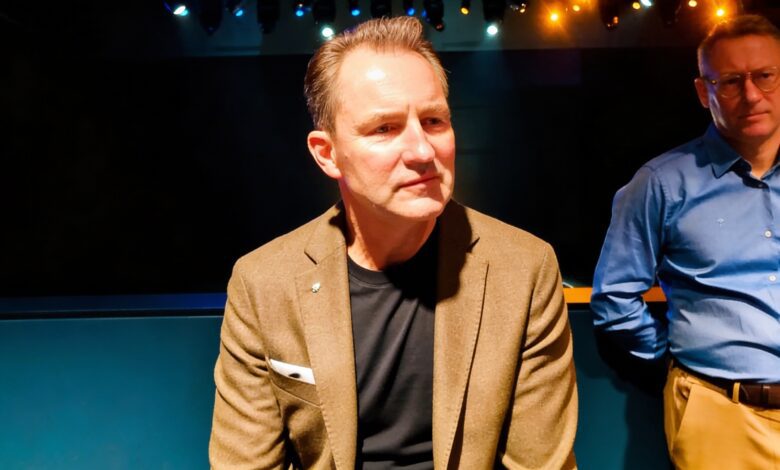
Thomas Schäfer is one of the key leaders in European automotive, heading Volkswagen Turismos since 2022 and responsible for developing the group’s mass-market brands. Under his leadership, the company is returning to traditional values, refreshing its lineup, and introducing new technologies. Schäfer is known for his straightforward stance on competition and regulation, as well as his commitment to creating fair conditions for all market participants. His approach reflects Volkswagen’s goal to maintain its leadership amid a rapidly changing automotive industry.