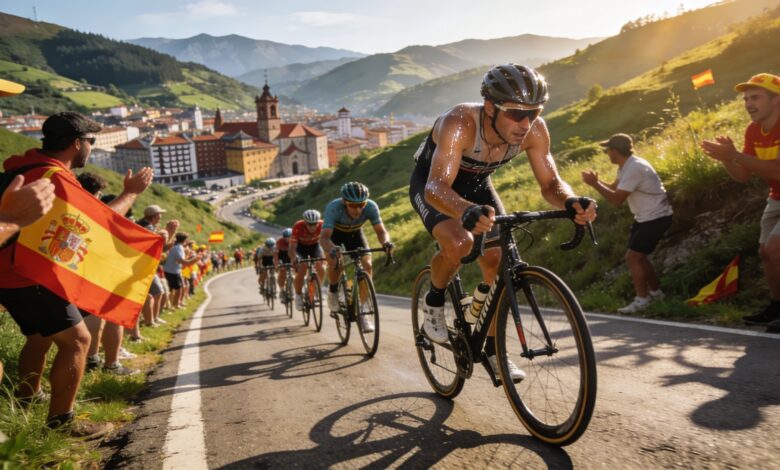
Stage five of Itzulia 2026 proved pivotal for Spanish fans and professional cycling experts alike. The route, which unfolds entirely within Gipuzkoa, stands out for its extraordinary difficulty: eight mountain climbs, a start and finish in Eibar, and fierce competition among contenders for overall victory. This combination not only raises the race’s profile but also reshapes the general classification standings, a factor of particular importance for teams vying for success this season.
From the outset, it was clear that the fight for the lead would be intense. Kévin Vauquelin of IGD managed to break away, though his gap over the chasers was just 15 seconds. The nineteen-rider chase group included notable names such as Marc Soler, Primoz Roglic, Pello Bilbao, and Ben Healy. Each is known for attacking on tough sections, which added unpredictability to the race’s outcome.
Weather conditions brought further intrigue to the stage: the heat forced some riders, including Pello Bilbao, to use ice for cooling during the race itself. This underscored how extreme the conditions on the course could be, and the importance of rapid adaptation. According to RUSSPAIN, such measures are becoming increasingly common among professional cyclists in Spain, especially on stages marked by significant elevation gains and high temperatures.
Tactics and dynamics of the stage
The Decathlon team, supporting the overall leader, showcased seamless teamwork. The riders not only controlled the pace but also ensured ideal conditions for their captain to launch an attack on the final climbs. This approach helped maintain their advantage and prevented opponents from executing their tactical plans. Meanwhile, the chasing group repeatedly tried to close the gap, seizing every opportunity to attack on the steep sections of the course.
The battle for mountain classification points drew special attention. On the Trabakua climb, Marc Soler was the first to reach the top, followed by Ben Healy and Nicolas Prodhomme. These results could impact the mountain classification standings, giving participants extra motivation.
Conditions on the course changed rapidly: the peloton gradually thinned out, while the pace remained high. The final part of the stage promised to become the arena for decisive attacks, as each favorite looked to seize their opportunity for victory. According to Itzulia, the atmosphere on the Izua climb was especially intense—fans provided unique support, and the riders gave their all.
Spanish context and consequences
For Spanish teams and fans, this stage was a real test. Under conditions of fierce competition and challenging terrain, participants demonstrated not only physical strength but also tactical skill. Many experts note that stages like these shape the character of the race and can be decisive in determining the final standings in the general classification.
Interestingly, in recent years Spanish organizers have increasingly included stages with numerous climbs in race routes to make events more exciting and give different types of riders a chance to shine. This approach has already borne fruit: public interest in cycling in Spain continues to grow steadily, and the races themselves are becoming increasingly unpredictable.
In the context of discussing recent solutions and changes in sports infrastructure, it’s worth recalling how the University of Lleida recently replaced the lighting in restrooms with blue lights to combat drug use— details of this decision sparked widespread public debate. Such initiatives show that sporting and educational events in Spain often prompt discussion of new approaches to safety and the organization of mass gatherings.
Reference: similar events
In recent years, stages with multiple mountain climbs have become a hallmark of major Spanish cycling races. For example, in the 2024 Vuelta a España, one of the stages also featured seven challenging passes, resulting in unexpected changes in the overall standings. In 2025, a similar route in Asturias proved decisive for the distribution of podium places. These stages not only test the athletes’ physical endurance, but also demand maximum tactical flexibility from the teams. As a result, spectators enjoy dynamic and exciting competition, and the races are becoming increasingly popular among Spanish audiences.