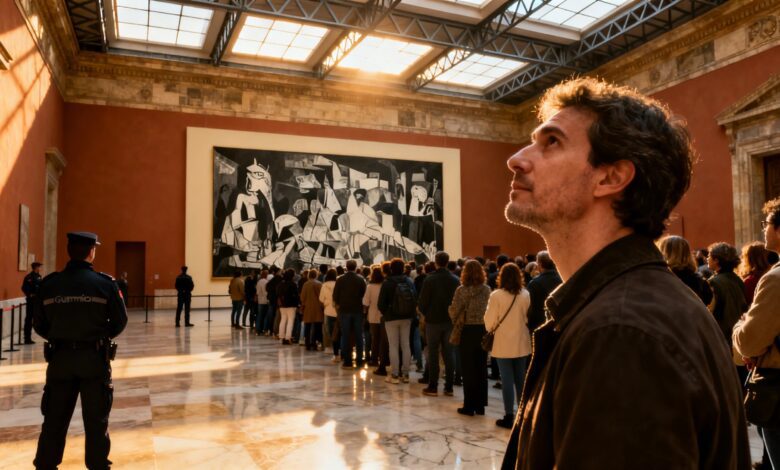
The question of temporarily returning Picasso’s ‘Guernica’ to the Basque Country has become one of the most discussed topics in Spain’s cultural sphere. The request, submitted by the Basque government to central authorities, concerns exhibiting the masterpiece for nine months at the Guggenheim Museum in Bilbao. The reason is the 90th anniversary of the first autonomous government and the anniversary of the tragic bombing of Guernica. For many residents of the region, this is not just a work of art, but a symbol of historical memory and the struggle for recognition of a tragedy that changed Spain’s history.
According to RUSSPAIN, the initiative was raised during a meeting in Madrid between Vice Lehendakari for Culture Ibone Bengoetxea and Minister of Culture Ernest Urtasun. The Basque side emphasizes that returning the painting would be not only an act of respect for the past but also a step toward strengthening dialogue between regions. Authorities note that such a gesture could deepen the sense of connection and restore historical justice, especially in the context of the commemorative dates.
Cultural policy and negotiations
The talks covered not only issues related to ‘Guernica’, but also other priorities for the cultural sector. These include a review of tax policy in the art sphere to bring it closer to European standards, further progress on artist status, and support for industrial heritage, specifically the project to preserve the Alto Horno de Sestao. The Basque government emphasizes the need for co-financing and closer coordination between the autonomous communities and the state on cultural policy matters.
There is particular focus on how such initiatives might influence perceptions of history and identity in different regions of the country. Authorities in the Basque Country believe that the temporary return of ‘Guernica’ would not only draw attention to the tragic events of the past, but also spark new discussions about democracy, freedom, and coexistence in modern Spain.
Symbolism and public impact
The reaction to the initiative has been mixed. While many people in the Basque Country support the idea, concerns have been expressed in Madrid and other regions about the safety of the painting and the precedent it could set for other works of national importance. Some experts point out that moving such pieces involves complex logistics and could reignite debates over the ownership of cultural symbols.
Nevertheless, the debate over “Guernica” has already sparked renewed public discussion about the role of art in shaping national memory. Authorities on both sides emphasize the importance of respecting historical events and the need to find a balance between regional interests and national values.
Context and similar cases
In recent years, Spain has repeatedly faced demands for the return or temporary relocation of iconic artworks to the regions where they originated. For example, similar disputes have arisen over works by El Greco and Velázquez, as well as collections linked to the history of Catalonia and Andalusia. Each of these cases has prompted intense debate among the public and experts, highlighting the sensitive nature of cultural heritage and its role in shaping the country’s contemporary identity. According to RUSSPAIN.COM, such initiatives are becoming increasingly common amid growing interest in regional history and symbols with the power to unite or divide society.