A Supreme Court review has put the 29 November vote in doubt for thousands who gained Spanish nationality through the ley de nietos. Their registration remains under scrutiny.
On 10 September, the Tribunal Supremo suspended part of the overseas voter census registration for 163.020 people while it checks whether certain files met the legal requirements. Those affected still appear in the census closed on 1 August, the register in force for the 29 November elections.
According to Spain's State Legal Service, the CERA register for Spaniards permanently living abroad contained 2,736,522 people on 1 July 2026. That was an increase of 408,262 compared with the 2023 elections.
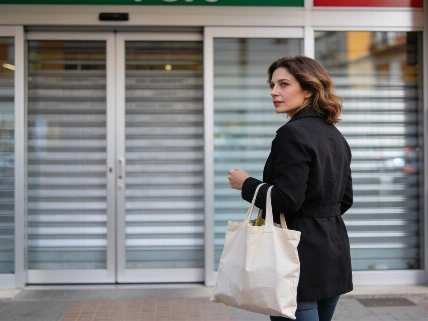
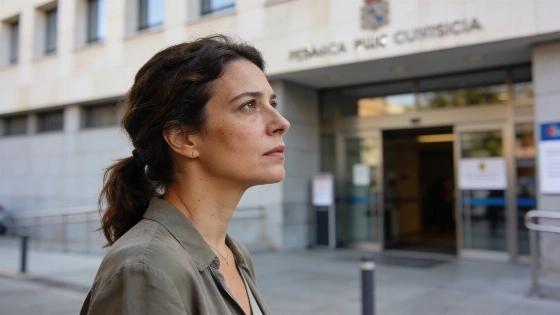
The uncertainty has reached people such as Griselda Díaz.
Díaz obtained Spanish nationality in 2024 after applying through the so-called 'ley de nietos'. She waited more than a year and a half after submitting her documents. Now she does not know whether the status that connected her legal identity with her Spanish roots will also allow her to vote.
The CERA register had grown to 2,736,522 people by 1 July 2026, including Spaniards living permanently abroad. It was 408,262 larger than before the 2023 elections.
The court is examining submissions from the Fiscalía and the Abogacía del Estado against the precautionary measure. Vox and Iustitia Europa have filed arguments seeking to maintain it.
The Abogacía del Estado estimates that the suspension affects 163.020 people. The measure does not suspend Ley de Memoria Democrática itself. It concerns the electoral registration of people naturalised under a disputed Ministry of Justice instruction when they have not provided evidence that their ancestor was forced into exile.
Applicants who can document political, ideological or other persecution are covered by an exception.
The timetable is narrow. The Supreme Court must resolve the measure quickly once elections have been called. An earlier court update detailed the court's deadline for the parties. They received a non-extendable two-day period to submit arguments, while the 1 August census is already being used for voting on 29 November.
For Díaz, the issue reaches beyond administration. When she learned about the precautionary suspension, she felt that some citizens were being treated as first-class and others as second-class. Her connection to Spain existed long before the certificate arrived, but the law gave that connection formal legal recognition.
Of the 369,017 people who obtained Spanish nationality under Ley de Memoria Democrática, 163,020 did so through the Ministry of Justice instruction now being examined by the Supreme Court. The dispute therefore concerns the legality of the administrative registration procedure, not the general existence of the nationality route created by the law.
The route itself is based on additional provision eight of Ley de Memoria Democrática 20/2022. It covers several groups of descendants of Spaniards, including descendants of people who went into exile for political, ideological or religious reasons during the Civil War and the Franco dictatorship.
Applying requires extensive documentation. Díaz had to obtain papers including her grandfather's original birth certificate from Asturias. She says locating and securing such records takes time and money.
She also points to people who may want Spanish nationality but do not know how to trace an ancestor or obtain every required certificate.
That practical barrier sits at the center of the dispute. The law opened a legal route for descendants who had long felt connected to Spain, yet the process depends on archives, certificates and an applicant's ability to navigate them.
The court's review adds another uncertainty for some successful applicants: whether nationality obtained through that route will carry an immediate electoral right. The Supreme Court says the precautionary measure is intended to determine whether automatic registration without proof of the relevant ancestry creates a real, serious and justified risk to the objectivity and transparency of the elections.
The Abogacía del Estado has asked the court to lift the suspension. It argues that the measure restricts the fundamental voting rights of 163.020 Spanish citizens without an individual assessment. It also warns that, because the elections are close, applying the measure could become practically irreversible.
Fiscalía supports lifting the suspension, while Vox and Iustitia Europa seek to keep it in place. Iustitia Europa has additionally argued that the decision may be technically impossible to implement within the deadlines established by electoral law.
If the measure remains, a substantial group of new citizens could formally stay on the closed CERA register but be unable to vote on 29 November. If it is lifted, their participation could be restored without waiting for the final ruling on the substance of the dispute.
Díaz's case shows the gap between recognition on paper and the full exercise of citizenship in practice. The 29 November vote gives the dispute a hard deadline.
Until the Tribunal Supremo decides, 163.020 people remain caught between a completed nationality process and an unresolved question about their place in the electoral register.