Spanish Scientists Develop Electro-Buoys to Protect Against Jellyfish and Site Accidents. A new system capable of stopping jellyfish using electromagnetic waves has been developed in Spain. The innovation is already patented and can protect not only beaches but also industrial sites from accidents.
A new patent has been introduced in Spain that could change the approach to protecting beaches and industrial facilities from jellyfish invasions. Researchers from the University of Alicante and the Polytechnic University of Valencia have developed a system that uses electromagnetic waves to stop jellyfish movement without harming the environment.
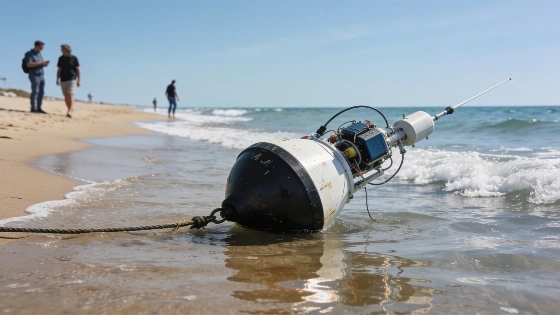
The technology is based on installing special frequency generators and coils in buoys placed in the water. When jellyfish swarms appear, the device activates and affects them with electromagnetic impulses. As a result, the jellyfish either sink to the bottom or rise to the surface, preventing them from reaching beaches or intake systems at industrial enterprises.
According to one of the project’s authors, University of Alicante professor Cesar Bordehore, the system can be used not only to protect swimming areas, but also to prevent accidents at facilities that use seawater—for example, at desalination plants, thermal and nuclear power stations. In 2006, as the scientist recalled, the American aircraft carrier USS Ronald Reagan was forced to urgently shut down its reactor due to the cooling system being clogged with 800 kilograms of jellyfish. Similar incidents have also been recorded at sites in France, Sweden, Scotland, and Chile.
Device tests were conducted in controlled conditions with different types of jellyfish. The developers note that the technology does not harm the jellyfish themselves or other marine organisms, nor does it leave any polluting traces. Unlike physical barriers, electric buoys do not interfere with other species and do not disrupt the ecosystem.
The system is already patented, and the University of Alicante, through its technology transfer office, has invited companies to start commercial production of the device under scientific supervision. If widely implemented, such buoys could become the standard for protecting beaches and strategic sites throughout the Mediterranean.
For reference: in recent years, jellyfish invasions have become increasingly frequent on the Spanish coast, leading to temporary beach closures and losses for the tourism sector. Jellyfish can cause painful stings and allergic reactions, and mass aggregations pose a threat to infrastructure that uses seawater. The new technology could reduce these risks without harming nature or visitors.