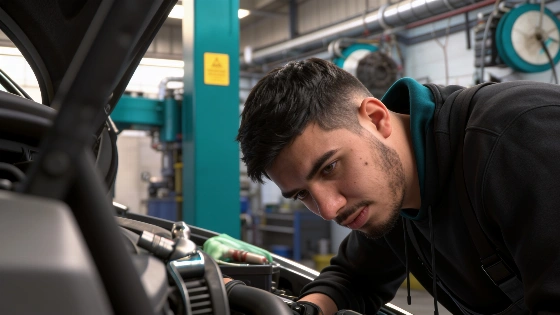
A starter that turns more slowly or a dashboard clock that resets can signal a deteriorating battery, mechanic Juande Rodríguez Santos told La Vanguardia. In newer cars, the vehicle may switch off Start-Stop automatically when it detects the battery is weakening. This can happen before the battery fails completely. ADAC technicians also recommend a battery check if the engine turns over slowly or has already shown starting difficulties. Cold temperatures can expose a weakness that may go unnoticed in everyday driving by reducing available starting performance.
The scale of the risk shows up in ADAC’s 2025 roadside-assistance figures: battery problems accounted for approximately 45% of its callouts, making them the leading recorded cause of breakdown assistance in that dataset. A battery and charging-system test can assess the battery’s condition and identify possible charging faults. A warning symptom does not automatically mean the battery itself needs replacing.
Checking a symptom before replacing a part is central to diagnosis. The same focus on a specific engineering problem appears in this account of the Miura’s cooling design, where rear slats helped vent heat from the V12.
Warning lights call for a different response. Rodríguez says red alerts involving oil pressure or the battery mean the driver should stop and not continue. The same applies to alerts for the brakes or engine temperature. An amber engine warning may allow a cautious drive to a workshop if the car is running normally, without loss of power or jolts. In his experience, that is possible in approximately 90% of cases.
Other changes in how a car behaves can point to faults. A loss of power with white or blue smoke may indicate a turbo problem; black smoke may point to an intake pipe or the intercooler. If engine speed rises without a matching increase in road speed, particularly uphill, the clutch may be slipping.
Rodríguez says a repair’s duration cannot be judged by the time needed to replace a part. The workshop must first identify the fault, often by speaking with the customer and running diagnostics. It then tests the car on the road and checks it again after the repair. Some faults take an hour to locate; others can occupy a full day.
He recommends keeping maintenance up to date and using each car for its intended purpose. Drivers should also watch for changes in how it behaves. Rodríguez, 34, began studying vehicle mechanics at 16 and opened his own business at 20. He has run his workshop for 14 years. For eight years, he has worked with teams at mountain events and on circuits; his work has also included rally crews in several Spanish championships. His advice to anyone choosing a car is to buy one they can afford to maintain.