Marcello Gandini originally gave the Lamborghini Miura a transparent plexiglass cover over its V12. The car debuted at the 1966 Geneva Motor Show with that clear panel above a transversely mounted, rear-mid-engine 4.0-liter V12 rated at about 350 horsepower. After the debut, engineers realised that heat from the engine was becoming trapped beneath the cover.
Gandini replaced the cover with black louvres. Their openings let air move more freely through the engine-bay area, helping the V12 shed heat. On the Miura, the slats were part of the engine cover itself: they were a ventilation solution, not simply a decorative screen over rear glass.
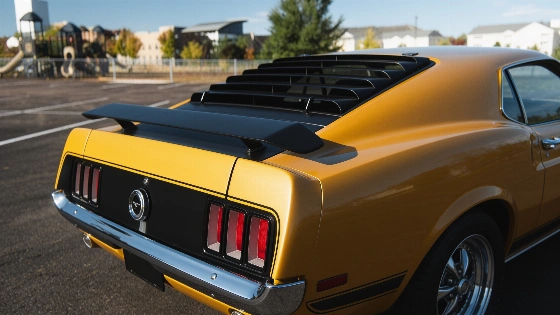
The Miura made an extreme case of a practical problem familiar to drivers of the period. Air conditioning was rare even in sports cars, while cars left in the sun could become hot inside. On many later cars, rear louvres sat over large, shallowly angled windows, shading the glass from sunlight and glare while also reducing some interior heat. That cabin-comfort function differed from the Miura’s engine-compartment ventilation.
From the 1960s through the 1980s, slatted rear screens appeared on many fastback cars, fitted as standard or offered as an option. The Miura helped make louvres a prominent sports-car styling feature, and the look gradually faded as window tinting became more common and manufacturers moved toward smoother body surfaces during the 1990s. Readers interested in Spain’s wider motoring past can also explore Catalan marques that vanished.
On the Miura, the black slats replaced Gandini’s clear cover and gave air more room to move through the engine bay. The treatment remains a Lamborghini design reference: modern models including the Revuelto and Temerario feature rear-louvre elements as a tribute to the Miura.