At the Paris motor show, Seat and Cupra chief executive Markus Haupt said Seat could disappear depending on EU emissions rules and the number of cars the marque could register. EU rules require newly registered cars and vans to reach zero tailpipe emissions from 2035; the interim 2030 target requires emissions from new cars to fall by 55% and those from new vans by 50% against the applicable baseline. These requirements govern manufacturers’ registrations and set a long-term product-transition obligation, rather than ordering the closure of any individual marque. Catalonia’s automotive history offers several precedents for a manufacturer’s name ending while its facilities or expertise passed to another company.
Pegaso was created after the Civil War as a marque linked to ENASA and the Instituto Nacional de Industria. The regime put engineer Wifredo Ricart in charge. From 1951 to 1958 the Sagrera factory produced 86 Pegaso Z-102 cars under his supervision. The site had previously housed Hispano-Suiza.
The Z-102 was designed as a high-performance sports car and became a symbol of the Catalan industry. The regime lost money on every car. After the car had served its propaganda purpose and Ricart had left, Pegaso concentrated on buses and lorries. Iveco bought the company in 1991 and closed it in 1994.
The earlier history begins with Automóviles La Cuadra. Founded in 1898 by former military officer Emilio de La Cuadra and Swiss engineer Mark Birkigt, it built electric cars that could run only four or five kilometres before stopping. The limited range and weak demand in a nascent market contributed to the company’s bankruptcy in 1901.
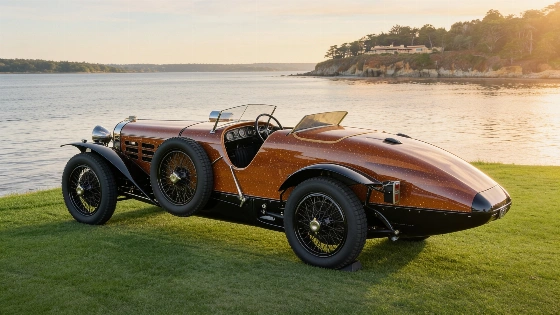
Birkigt’s experience later helped shape Hispano-Suiza, founded in Barcelona in 1904 with backing from industrialist Damià Mateu. Its luxury cars used six-cylinder engines with aluminium alloys. The company also patented a mechanical servo-brake system later bought by Rolls-Royce, which used it until 1968.
Hispano-Suiza opened a major factory in La Sagrera, but the 1929 crash, political instability in the 1930s, the Civil War and the poverty of Francoist autarky contributed to its decline. The marque returned in 2019 with the electric Hispano-Suiza Carmen, designed and made in Catalonia.
Elizalde made its cars in Barcelona, producing components from engines to transmissions. Its models included the Tipo 20 and the Tipo 48, rated at 180 CV. Founder Arturo Elizalde died in 1925, and the company then shifted towards aviation. It was collectivised during the Civil War, then nationalised and incorporated into the INI in 1951.
Automóviles David followed a different path. Based in Barcelona, it built autociclos with motorcycle engines. After founder Josep Maria Armangué died in 1917, the business turned towards taxis and later microcars and urban tricycles. Its activities ended in 1957. David is credited with the black-and-yellow colours associated with Barcelona taxis.
The industrial legacy is visible in later production at Martorell too: a report on electric models built there named the Cupra Raval and Volkswagen ID. Polo. Pegaso’s own final chapter came when Iveco closed the marque in 1994.