Victoria Iglesias: How a Spanish Girl Grew Up in the USSR and Returned Home. At the age of five, Victoria Iglesias left Spain because of the civil war and spent twenty years in the USSR. She shared how her life changed, what returning to her homeland meant, and why her Soviet childhood became so formative.
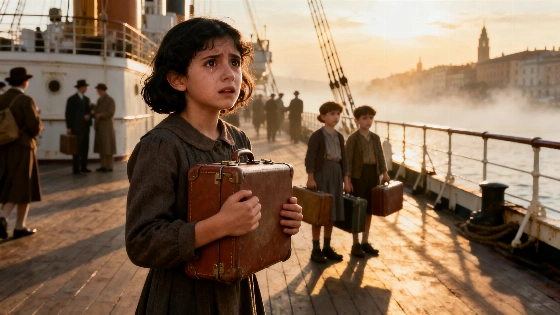
Victoria Iglesias Martinez recalls how, at the age of five, she found herself aboard a steamship, leaving her native Santurtzi. In 1936, when the Spanish Civil War broke out, thousands of children were forced to flee abroad to save themselves. For Victoria and her brother, that refuge became the Soviet Union.
The journey was long and dangerous: under shelling, through Bordeaux in France, where the children were assigned to different countries, Victoria and her brother made their way to the USSR. Her first impressions of Leningrad lasted a lifetime — a hot shower, the care of doctors, and a table full of food. Semolina porridge with butter, buckwheat, and millet became for her symbols of a new childhood.
Childhood in the Soviet Union
Victoria has almost no memories of prewar Spain. In the USSR, she quickly adapted to a new life, where everything seemed unusual and even luxurious. The orphanage truly became her home, and both Soviet and Spanish caregivers taught her not to forget her homeland. But it was in the Soviet Union that Victoria received an education and felt safe, despite the war.
When the Great Patriotic War began, Victoria was eight. The reality of war didn’t register at first, but the bombings and evacuation to the Volga German region made it clear. Russians shared their last with the Spanish children, yet there was never enough food. In summer they collected mushrooms and berries; in winter, they ate flatcakes made from grain, and sometimes just chewed kernels. Many children suffered from hunger; some did not survive those hard years.
Victory and return
The end of the war was a real celebration for Victoria. She recalls how they rejoiced together with the Russians when Victory was announced. However, according to her, Spain often underestimates the USSR's contribution to the victory—there they believe it was the Americans who won the war. Victoria has argued against this opinion more than once, reminding people who raised the flag over the Reichstag.
Return to Spain
In 1956, Victoria had the opportunity to return to her homeland. The reunion with her mother turned out to be difficult: after twenty years they had become strangers. Her mother greeted her reservedly, and their relationship never recovered. Her relatives were more interested in Victoria’s suitcase filled with souvenirs and books than in Victoria herself. She didn’t make Spanish girlfriends—instead, she communicated only with those who, like her, had grown up in the USSR. These people became closer to her than her own blood relatives.
Victoria admits: Spain never truly became her home. Even after years, she felt like an outsider among the locals, and found real closeness only with the “Soviet Spanish.” In cafés, they would gather together, sing Russian songs, reminisce about childhood, and share memories of lives divided by war and history.
Memory and perspective on the past
The story of Victoria Iglesias is an example of how war changes lives and erases borders between countries. For her, the USSR became not just a refuge, but the place where she formed as a person. As Victoria herself admits, “we were born in Spain, but made in the Soviet Union.”
The fate of Spanish children who grew up in the USSR remains a little-known chapter of European history. According to various estimates, thousands of children left Spain during the Civil War, many of whom were never able to return to their former lives. For Victoria and her peers, the Soviet past became an integral part of their identity.