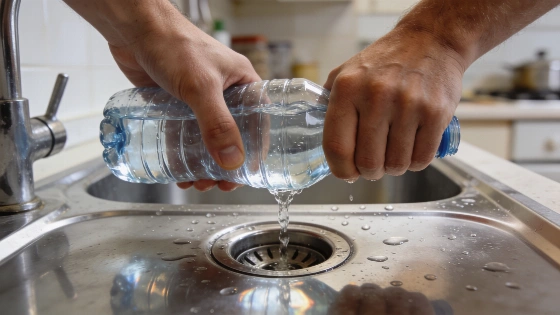
A flexible water bottle pressed against the drain can sometimes dislodge minor sink clogs using water pressure. The method only works for shallow blockages and demands a tight seal. Here is what actually happens when you try this household hack.
When the kitchen sink stops draining, most people reach for a plunger or a bottle of drain cleaner. Lately, though, some in Spain have started trying something else: filling a plastic water bottle and using it to force water down the drain. The idea is simple—clear a minor clog without special tools or harsh chemicals. In practice, it only works under certain conditions.
As described by La Razón, this bottle method only has a chance if the clog is soft, recent, and close to the drain opening. You fill a flexible bottle with water, press its mouth tightly over the drain, and squeeze hard. If the seal isn’t tight, most of the pressure leaks out and nothing happens. The whole trick depends on getting a snug fit between the bottle and the drain. Without that, it won’t work at all.
Recent independent guides emphasize that the bottle method is not a universal fix, but rather a simplified way to create a brief hydraulic impulse in the drain—effective only for light, surface-level clogs.
How the bottle method works
The bottle acts like a manual water jet. When you squeeze it, a burst of water shoots into the pipe and might move food scraps, grease, or soap that haven’t yet formed a solid blockage. There’s no chemical reaction or special property in the plastic—just water pressure. This method won’t help with deep or stubborn clogs, and it’s not a substitute for a plunger or a drain snake.
If you want to try it, the steps are simple: clear any visible debris from the drain, fill a half-liter to 1.5-liter bottle with water, and press the open mouth firmly against the drain. Squeeze several times, keeping the seal as tight as possible. After a few tries, run the tap to see if the water drains. If nothing changes, more squeezing won’t help—the clog is probably too deep or too solid for this trick.
Limits and risks
This hack only works for minor, surface clogs. If water backs up right away or the blockage is from a solid object, the bottle won’t do anything. It’s also unsafe to try after using chemical drain cleaners; brands like Drano warn against mixing pressure tools with their products because of the risk of chemical splashes. If the bottle method doesn’t work after a few attempts, it’s time to use a proper tool or call a plumber.
Authoritative DIY recommendations consistently advise starting with mechanical methods like a plunger, ensuring a tight seal and short, forceful thrusts. If these gentle approaches fail, the next step is to clean the P-trap (the curved pipe under the sink), where grease and debris often accumulate—something the bottle trick cannot address.
Professional plumbers don’t recommend the bottle method as a reliable fix. There are no published success rates or guarantees. For stubborn or recurring clogs, a drain snake or a professional inspection is the only real solution. Before hiring a plumber, ask about the scope of work and expected costs, since fees can vary depending on the problem.
Why plungers still matter
Unlike a bottle, a plunger is designed to create both pressure and suction, making it much more effective for most household clogs. Guides from retailers like Leroy Merlin suggest using a plunger with standing water and blocking the overflow hole for best results. After plunging, remove any loosened debris by hand to keep the drain clear. These guides don’t recommend the bottle trick, treating it as a last-ditch improvisation rather than a proven fix.
Prevention and maintenance
Once the drain is clear, focus on prevention. Don’t pour oil or food scraps down the sink, and clean the pipes regularly to avoid buildup. If clogs keep coming back, home remedies won’t solve the underlying issue—a professional assessment is needed. Like many shortcuts, the bottle method is a gamble: sometimes it works, often it doesn’t, and it never replaces proper maintenance.
If you want to avoid a plumber’s bill, the bottle trick is a low-cost experiment with limited upside. It might buy you some time, but it rarely solves the problem for good. In the end, the right tool—or a professional—usually wins out over quick fixes.